

The Real-World Dilemma
Imagine you are engineering a high-efficiency solar string inverter or a next-gen EV fast-charging station. At the heart of your system sits a microcontroller (MCU) commanding the power stages. The problem? Your MCU output signals are fundamentally weak—they cannot directly muscle the heavy gate capacitance of a high-power IGBT.
To bridge this gap, you need an intermediary powerhouse: the Gate Driver Circuit. Its mission is to accept those faint control signals and amplify them into massive source and sink currents capable of switching your IGBTs cleanly and efficiently.
While integrating this function into a single chip is common practice, many legacy or ultra-low-cost systems rely on discrete component driver circuits. Let’s break down how these discrete circuits operate, explore their various design topologies, and look at the hidden engineering trade-offs involved.
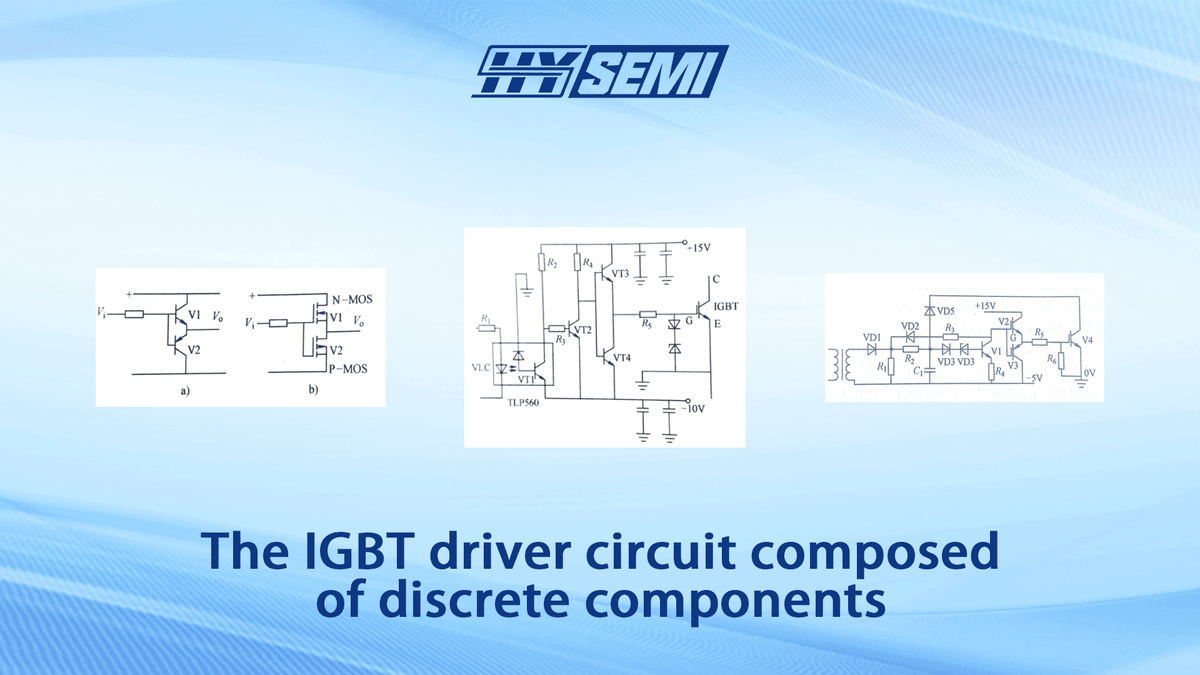
The Core Blueprint of a Discrete Driver
Building an IGBT driver out of individual, discrete components means you have to manually account for four non-negotiable performance factors:
- Sufficient Sourcing & Sinking Current: The circuit must rapidly charge and discharge the IGBT’s gate capacitances (Cge and Cgc) to snap the switch open or shut, thereby minimizing switching energy losses.
- Optimal Voltage Rails: You typically need a crisp +15V ±10% rail for a clean turn-on, and a negative bias of -5V to -15V for turn-off. Incorporating a negative turn-off voltage is vital—it bolsters the system's anti-interference capability and stops accidental turn-ons triggered by the Miller effect.
- High-Speed Push-Pull Output: Achieving rapid switching speeds requires an output stage with exceptionally low output impedance.
- Essential Circuit Protection: Basic failsafes—such as precise gate resistor selection, gate voltage clamping, and active Miller clamping—must be manually implemented. (Advanced protections, like desaturation short-circuit detection, are notoriously complex to build discretely).
Three Classic Discrete Driver Topologies
Over the years, power electronics engineers have relied on a few standard configurations to get the job done:
1. Voltage-Type Push-Pull Drivers
This family splits into two primary tiers based on the power level required:
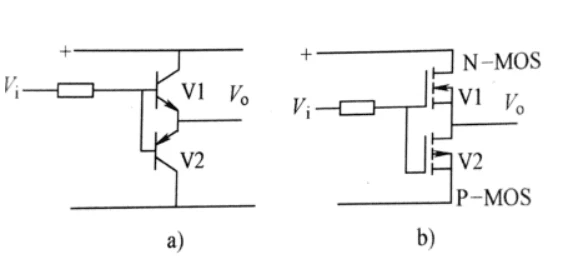
- Bipolar Transistor Approach (Low-Power): As shown in Figure 1a, a basic complementary pair (NPN + PNP) switches based on the control signal Vi. When Vi is high, V1 conducts to turn the IGBT on; when low, V2 conducts to pull it off. This configuration is restricted to low-frequency, low-power applications.
- MOSFET Push-Pull Approach (High-Power): Illustrated in Figure 1b, swapping out the BJTs for high-power N-channel and P-channel field-effect transistors unlocks superior performance. This variant can deliver peak driving currents exceeding 10A at high operating frequencies, making it robust enough for heavy-duty industrial IGBT modules.
2. Transformer-Isolated Integrated Protection Circuits
Standard optical isolation (optocouplers) can sometimes introduce propagation delays and sluggish signal edges. In high-performance topologies (Figure 2), engineers swap out the optocoupler for a magnetic ring transformer to couple the square-wave control signal.
Because transformers completely bypass the speed bottlenecks of optocouplers, they deliver razor-sharp rising and falling edges with virtually zero transmission delay. This makes the architecture an excellent fit for high-frequency, high-power setups requiring instantaneous overcurrent protection response.
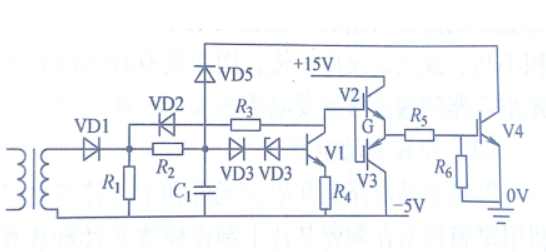
Figure 2 Integrated Drive and Protection Circuit
3. Classic Optocoupler-Based Discrete Circuits
In a classic configuration (Figure 4), an input signal triggers an isolated optocoupler (VLC). When it conducts, transistor V2 cuts off, allowing V3 to output a clean +15V turn-on voltage. When the input signal drops to zero, the loop reverses, outputting a solid -10V to ensure the IGBT remains firmly locked off.
⚠️ Layout Best Practices: To prevent catastrophic signal degradation, the +15V and -10V local power supplies must sit as close to the driver circuit as possible. Furthermore, connections running from the driver output and power ground to the IGBT gate and emitter must use twisted-pair wiring and should ideally never exceed 0.5 meters in length.
Critical Math & Engineering Traps of Discrete Design
Before committing to a discrete PCB layout, you must account for these three engineering realities:
A: Gate Overvoltage Vulnerability
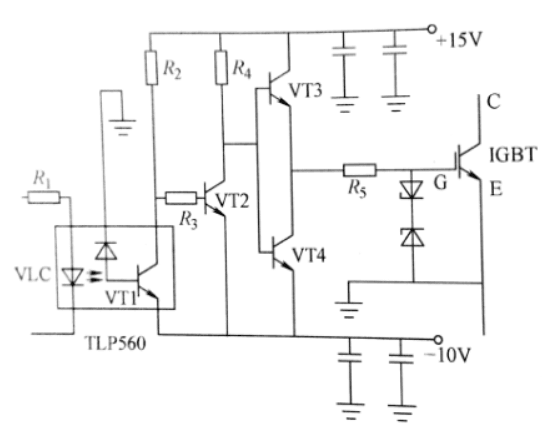
Figure 3: IGBT driver circuit composed of discrete components
The absolute maximum gate withstand voltage of most IGBTs hovers around ±20V. Exceeding this will permanently rupture the gate oxide layer. While adding a parallel Zener diode or a resistor across the gate mitigates this, both options demand a compromise:
- A Zener diode introduces parasitic equivalent input capacitance (Cin), dragging down switching speeds.
- A bleeder resistor degrades the overall input impedance, pulling more continuous drive current from your rails.
B: Crunching the Peak Current Numbers
Even though an IGBT requires negligible power during its static "on" state, its input behaves like a capacitor during transitions. Assuming the input capacitance (Cin) charges linearly during the rise time (tr), your minimum required driving current is calculated as:
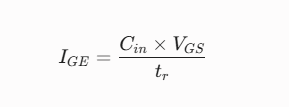
Where tr is roughly estimated as 2.2 * R * Cin (R being the total input loop resistance). If your discrete push-pull stage cannot supply this burst of IGE, your switching times will stretch out, causing the IGBT to overheat and fail.
C: Split Power Supply Complexity
To reliably combat the latch-up effect and ensure the device stays off amid high dV/dt noise, a true negative bias is mandatory. This forces your system architecture to accommodate a more complex, costlier dual-rail power supply design.
The Verdict: When to Go Discrete vs. Integrated
Discrete driver circuits certainly have their place. For cost-sensitive, low-power, or non-critical legacy applications where a minor layout error won't derail an entire project, a basic discrete assembly is a viable, budget-conscious choice.
SHYSEMI Engineering Recommendation
For medium-to-high power architectures, or any deployment demanding uncompromising reliability—such as industrial motor drives, renewable energy inverters, or grid infrastructure—SHYSEMI strongly advises moving away from discrete solutions in favor of dedicated, integrated IGBT driver ICs.
By consolidating the push-pull output stage, galvanic isolation, under-voltage lockout (UVLO), desaturation detection, and Active Miller Clamping onto a single silicon die, SHYSEMI driver chips radically simplify your bill of materials (BOM). They remove the layout headaches of discrete engineering, slash overall development costs, and provide a level of robust, predictable system safety that discrete components simply cannot match.