

Introduction: one part number, four prices
“Purchasing wants to know why the same 1200V IGBT quotes at 30 RMB industrial, 120 automotive and 800 military. Is it the same die?”
“It might be,” Dave said. “Or it might be the same die sorted into different outcomes. Half of what you pay for is the part. The other half is how unlikely it is to fail.”
This is the most counter-intuitive thing about power device purchasing: a reliability grade is not a performance grade. It does not change rated current or voltage. It changes at what temperature it works, for how many years, and with what failure-rate commitment.
Here is the breakdown across temperature, lifetime, testing, screening and cost — plus the practical question of which grade your project actually needs.
The real difference: a failure-rate commitment, not stricter testing
It is not simply “more tests.” Three things differ, in order of importance:
- The committed failure probability. Consumer allows a few tenths of a percent of early failures; automotive targets zero PPM; military screens every part to an extremely low residual rate. That commitment drives sample size, screening flow and cost.
- The committed operating envelope. The same 1200V/50A part may be guaranteed only 0–70°C at consumer grade, versus -40 to 150°C for 15 years at automotive grade. A wider envelope changes die area, termination design and package materials.
- The committed traceability. Automotive and military require lot traceability, PCN change notification and PPAP documentation. None of that shows up on the part, but all of it shows up in an audit.
So “one die, four prices” is not strange: the design may be identical, while screened-out yield, amortized qualification cost and traceability infrastructure are completely different.
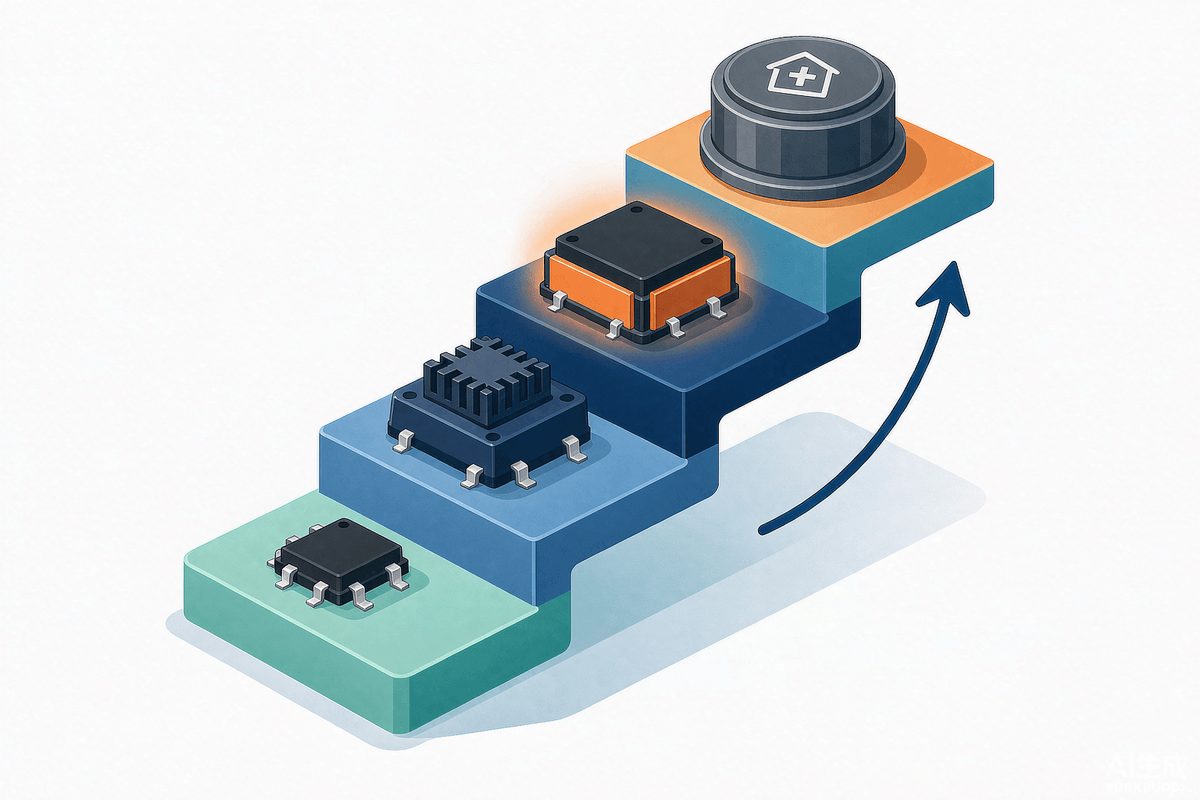
The four grades at a glance
DimensionConsumerIndustrialAutomotiveMilitary / aerospaceOperating temperature0–70°C-40 to 85°C (some to 125°C)-40 to 150°C-55 to 175°C (some wider)Expected life3–5 years10–15 years15–20 years20+ yearsMain standardsJEDEC / GB/TJEDEC / IEC / GB/TAEC-Q101 (modules: Q104 / AQG 324)MIL-STD-883 / ESCCSample size25–45 per lot45–77 per lot77 per lot (LTPD 10)100% screening plus samplingHTRB duration500–1,000 h1,000 h1,000 h (some 2,000 h)2,000–3,000 hTemperature cycling300–500 cycles500 cycles1,000 cycles2,000+ cyclesIOL cycles5,000 at ΔTj = 100 K5,000 at ΔTj = 100 K15,000 at ΔTj = 50 K15,000–30,000100% screeningNot requiredPartially requiredUsually required (dynamic burn-in)Mandatory (PIND, X-ray, acoustic)RadiationNoneNoneGenerally none (special cases)Mandatory (TID + SEE)Relative cost1x1.5–2x3–5x10–50x
One easily missed detail: automotive IOL is 15,000 cycles at ΔTj = 50 K, while industrial is 5,000 at ΔTj = 100 K. Three times the cycles at half the swing — by Coffin-Manson (life ∝ ΔTj⁻²) the equivalent damage is roughly comparable. The standards are not simply “adding cycles”; they are re-deriving conditions from real duty profiles.
Consumer: the engineering of “good enough”
Fast chargers, appliance power, LED drivers, adapters: indoor, room temperature, 3–5 year life, and replacement costs less than a price increase on the part.
So the design logic is minimum cost: smallest die, thinnest package, minimum test set. That is not corner-cutting; it is what the application pays for. Putting automotive parts in a charger adds cost and nothing else.
The trap is consumer parts drifting into industrial use. Equipment running 24/7 in a sealed cabinet at 45°C ambient, plus self-heating, easily pushes junction temperature past 100°C — while the consumer guarantee covers only 70°C ambient. This pattern accounts for a large share of field returns and is very hard to attribute.
Industrial: the real divide is beyond eight hours a day
Industrial grade (-40 to 85°C, sometimes 125°C) serves drives, servos, UPS, industrial power and PV inverters. Beyond temperature, three things change:
- Continuous duty. Industrial equipment often runs 24/7 for a decade. Fewer thermal cycles, but long dwell at high temperature — that tests creep and material aging, not thermal shock.
- Environment. Dust, oil mist, humidity, vibration, grid instability. Hence vibration, shock and H3TRB requirements.
- Downtime cost. An hour of downtime can cost tens of thousands, so industrial customers pay for “one less failure” — but not for automotive certification they do not need.
Practical advice: do JEDEC properly (HTRB, HTGB, TC, H3TRB all present) and add IOL where the customer asks. Blanket AEC qualification spends money the customer will not pay for.
Automotive: from “a device” to “a controlled product”
Automotive is the real divide, because the constraint expands from the device to the entire production system.
Temperature is only the surface: -40 to 150°C forces new termination design, solder alloy, molding compound and wire material; 15–20 years forces conservative acceleration assumptions; zero PPM forces 100% screening in production.
- Change control (PCN). New fab, new solder, new molding compound, layout change — all require advance notification and re-qualification. This constrains the supply chain far more than the testing does.
- Traceability. Every part traceable to wafer lot, assembly lot and test record, so a customer can bound the impact of a problem.
- System certification. IATF 16949 plus PPAP. Without it, an AEC-Q101 report will not reach volume production.
That is why “3–5x the price” is mostly yield loss from wide-temperature screening, amortized qualification, system maintenance and small-volume supply — not test fees. Understanding this changes how you negotiate.
Military and aerospace: a different requirement, not a better one
- Per-part screening instead of sampled qualification. 100% burn-in, hermeticity, PIND, X-ray and acoustic scanning — removing anything that might fail, not proving lot capability.
- Radiation hardness. Total ionizing dose and single-event effects. Largely absent from automotive requirements, decisive for whether a satellite survives five years.
- Hermetic packaging. Ceramic or metal seals against moisture — which also makes damp-heat tests largely irrelevant.
- Very long life, very small volume. 20–30 year design life with production runs of a few hundred parts, so fixed costs dominate the unit price.
The 10–50x price is driven by screening, qualification and tiny volumes, not exotic materials. Summarizing it as “more reliable” misses the radiation and hermeticity requirements that actually define it.
Test conditions side by side
ItemConsumerIndustrialAutomotiveMilitaryHTRB1,000 h, Tj 125°C, 80% VR1,000 h, Tj 150°C, 80% VR1,000 h, Tj 150°C, 100% VR2,000 h+, Tj 175°C, 100% VRHTGB1,000 h, Tj 125°C, 100% VGS1,000 h, Tj 150°C, 100% VGS1,000 h, Tj 150°C, ±100% VGS2,000 h+, Tj 175°C, ±100% VGSTemperature cycling300 cycles, -40 to 125°C500 cycles, -55 to 125°C1,000 cycles, -65 to 150°C2,000+ cycles, -65 to 175°CH3TRB500 h, 80% VR1,000 h, 80% VR1,000 h, 80% VR1,000 h, 100% VR (hermetic exempt)IOL5,000, ΔTj 100 K5,000, ΔTj 100 K15,000, ΔTj 50 K15,000–30,000HAST96 h, 130°C/85%RH96 h, 130°C/85%RH264 h, 130°C/85%RH264 h+ where applicableMechanical shock500 G/0.5 ms1,500 G/0.5 ms1,500 G/0.5 ms1,500–3,000 GVibration20–500 Hz, 10 G20–2,000 Hz, 20 G20–2,000 Hz, 20 G20–2,000 Hz, 30–50 G
Why cost rises non-linearly
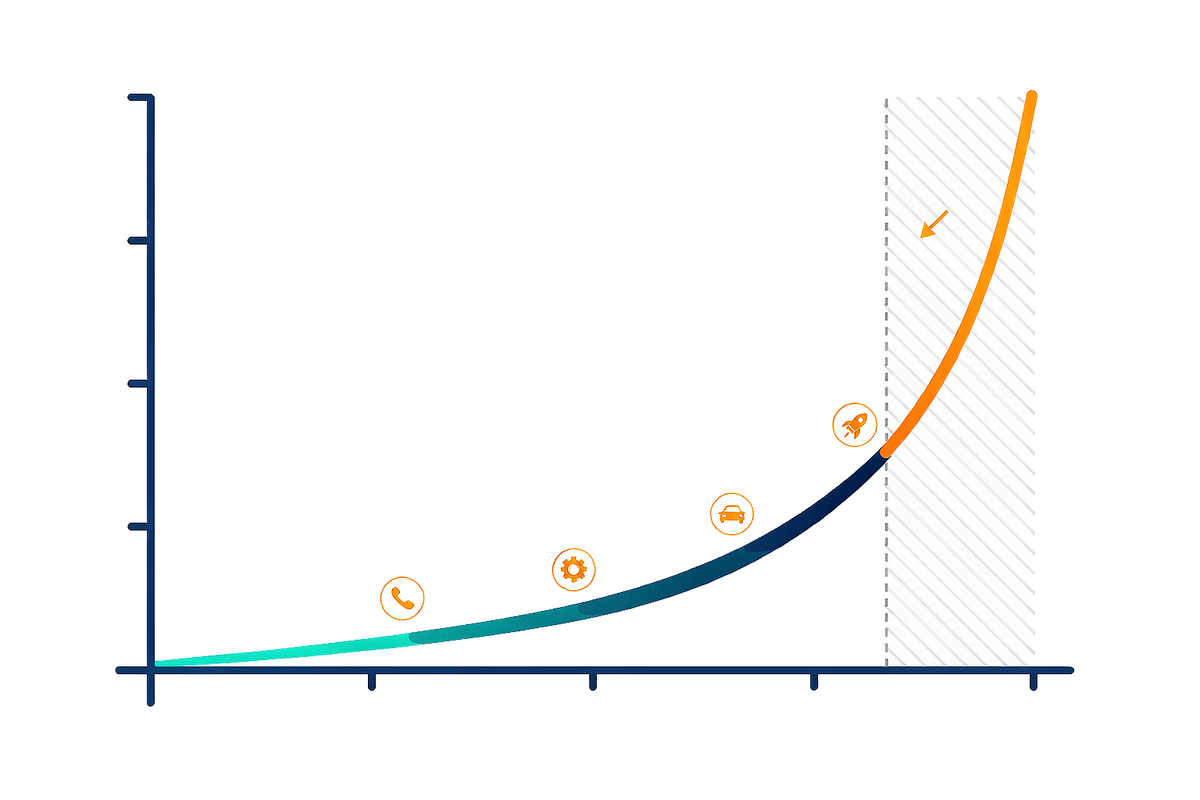
- Yield loss. Wide-temperature screening removes parts with marginal parameters. What industrial grade accepts, automotive may only use 60–80% of; military screens again. The rejected cost lands on the survivors.
- Fixed-cost amortization. Qualification, system maintenance, failure-analysis lab and traceability systems are fixed. A million automotive parts a year absorb them; a few hundred military parts carry all of it.
- Liability. Automotive and military failures involve human safety, so quality liability and insurance costs eventually appear in the quote.
Selection: do not over-design, do not save in the wrong place
- Calculate real junction temperature. Not ambient — ambient plus self-heating plus cabinet rise. If it lands at 105°C, an 85°C-max industrial part is not “close enough.”
- Calculate the duty profile. How many starts per day, what swing, continuous or intermittent. A frequently cycled industrial drive may demand more IOL than an automotive application.
- Quantify the failure cost. Replacing a charger, or stopping a line, or recalling vehicles? That number decides how much “one less failure” is worth.
ApplicationRecommended gradeKey reasonFast chargers, appliances, consumer powerConsumerRoom temperature, short life, low failure costIndustrial power, drives, servosIndustrialContinuous duty, expensive downtime, no automotive documents neededPV inverters, energy storageIndustrial (tightened)Outdoor humidity, large day-night swings; strengthen H3TRB and IOLOn-board charging, traction, charging pilesAutomotiveWide temperature, long life, zero PPM, PCN and traceabilitySpace, military, nuclearMilitaryRadiation, hermeticity, per-part screening — no substitute
The two classic errors: over-design (automotive parts in a consumer product, tripling cost with no perceived benefit) and saving in the wrong place (industrial parts in outdoor 24/7 equipment, where the saved money returns with interest in year three).
FAQ
Can industrial-grade parts be used in automotive applications?
Technically they may work; commercially they cannot pass qualification. Automotive customers require AEC-Q101 reports, PCN change management, lot traceability and PPAP. Even with sufficient measured performance, the documentation gate stops it.
Is 3–5x the price for automotive worth it?
It depends on failure cost. For traction inverters, one failure can trigger a recall far exceeding the part-price delta — worth it. For an indoor consumer supply, the extra cost buys nothing the customer can perceive — not worth it.
Can one die be both industrial and automotive grade?
Yes, if the design itself meets automotive requirements and parts are sorted by screening and qualification flow. A common approach is one wafer and one package with wide-temperature testing and 100% screening separating automotive lots. The reverse is not true: an industrial die does not become automotive by testing it more.
Is military grade always more reliable than automotive?
Not comparable. Military is far stricter on radiation, hermeticity and per-part screening, but its failure-rate commitment is built on small volumes and 100% screening. Automotive targets zero PPM at million-unit volumes. The objectives differ, so a simple ranking is meaningless.
