

Core Definition and Technical Connotation of Collector Current (Ic)
As a key parameter of IGBT modules, the collector current Ic (Maximum DC collector current) represents the maximum DC current that the module can withstand in the saturated conduction state. This critical indicator directly determines the load capacity of the power device, but it is important to note that:
The Ic value of dynamic characteristics is not constant but is affected by multiple factors, such as:
- Temperature conditions (temperature of the heat sink)
- Duration (time of current flow)
- Heat dissipation design (efficiency of the heat sink)
- Working environment (ambient temperature)

Evolution of Industry Labeling
For the data labeling of Ic, in the early stage, a unified laboratory condition of Tc = 25℃ (Ic25) was adopted. Obviously, under working conditions, the power transistors generally have a temperature Tc that exceeds 25℃.
Later, some manufacturers provided Ic values at temperatures of 80℃, 90℃, 100℃, 110℃, etc. When simply representing, the specific Celsius temperature values are marked after Ic, such as Ic25, Ic100; or separated by @, such as Ic@ Tc = 250°C. This is adjusted to more practical temperature parameters (Ic80/Ic100 or Ic@Tc = 80℃)
Engineering Calculation Method Based on Temperature Correlation Precise calculation formula:

Parameter Explanation
- Tj(max): Maximum Junction Temperature (125°C for civilian, 150°C for industrial, 175°C for military)
- RθJC: Thermal Resistance from Chip to Frame (Critical Heat Dissipation Indicator)
- VCE(sat): Saturation Voltage Drop (Requires Iterative Calculation)
Calculation difficulties
To solve the "Ic-VCE(sat)" problem with two unknowns using an iterative algorithm, usually more than two sets of thermal parameter data are required. This is mathematically referred to as an iterative algorithm. It should be noted that Ic is not the maximum current that the IGBT collector can continuously pass through; even in ideal cooling conditions, this is also the case.
Practical Reduction Calculation Techniques
Under the same conditions, Ic and Tc have a roughly linear relationship within the applicable temperature range. The value by which Ic decreases for every 1℃ increase in Tc is called the reduction factor.
SHYSEMI hereby reminds you: The reduction factor is not a formal technical parameter but rather a common practice within the industry. Therefore, it generally does not appear in technical manuals and needs to be calculated by ourselves.
Reduction factor (δ) formula:
In the formula, T represents the value of Tc; Ic is the value corresponding to the Tc condition.
For example, for BUP307, at 25℃, the Ic is 35A, and at 90℃, the Ic is 23A. The reduction factor is
δ = (35 - 23) / (90 - 25) ≈ 0.18
Knowing δ and Ic25, we can roughly determine the Ic value at any Tc. For example, the Ic value at 75℃ for BUP307:
Ic75 = 35 - 0.18(75 - 25) ≈ 26(A)
However, in general technical manuals, a curve graph is usually provided to indicate the trend of Ic and Tc. As shown in Figure 1, the curve is slightly curved. Thus, the calculation results of the formula are only approximations.
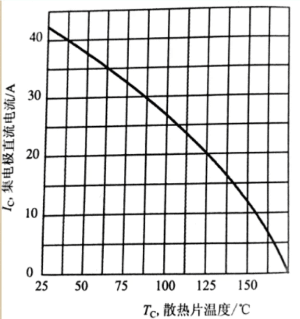
Figure 1 Relationship diagram between Ic and Tc
The differences in δ values among various packages are significant:
- TO-247 package: δ ≈ 0.3 - 0.5
- DIP module: δ ≈ 0.15 - 0.3
Key Points for Engineering Application
Selection Criteria:
Based on the Ic value under the actual working temperature
Maintain a safety margin of more than 20%
Heat dissipation design correlation:
For every 10℃ reduction in junction temperature, the Ic carrying capacity increases by 8-12%.
Optimizing heat dissipation can increase Ic by 30% at the same Tc.
Industry measured data:
- Frequency converter application: When Tc = 80℃, Ic is reduced by 40%
- Servo drive: For intermittent loads, the instantaneous Ic overload capacity needs to be considered
Mastering these core knowledge will enable you to make more scientific decisions when designing power systems, and fully leverage the performance potential of IGBT modules.