

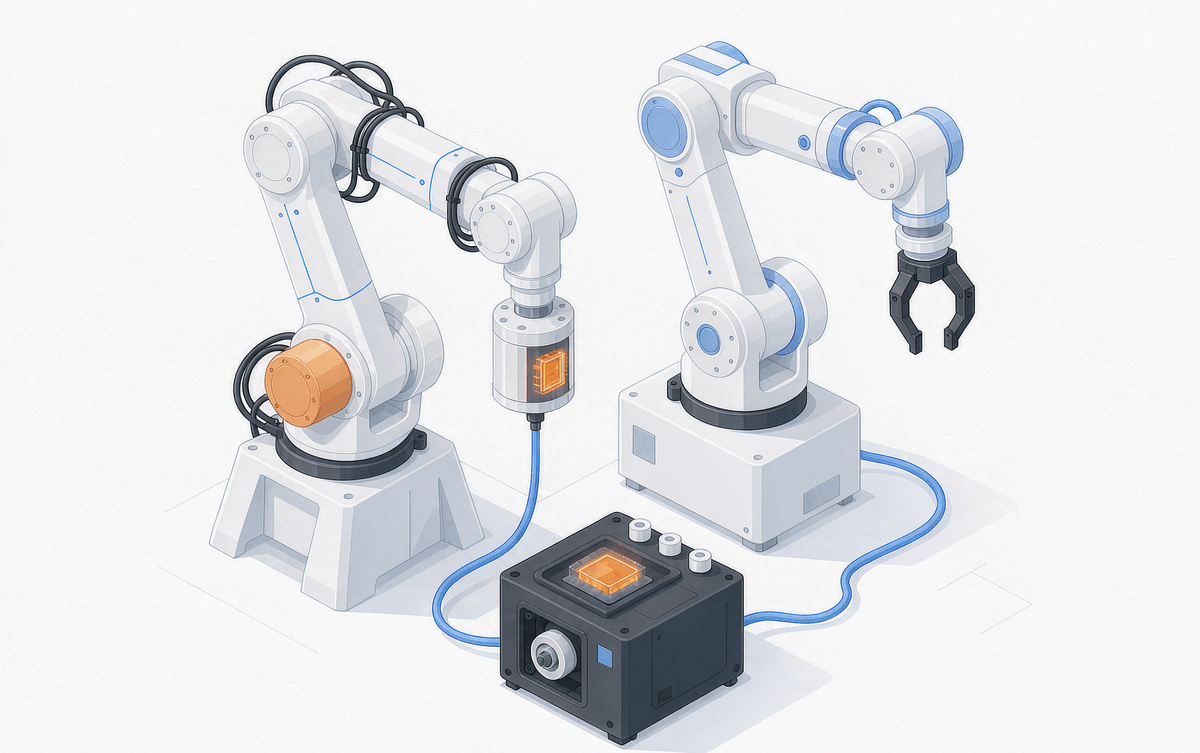
An IPM (Intelligent Power Module) is one of the key power components in a servo motor drive. In a robot arm servo system, the IPM mainly handles three-phase inversion — converting the DC-link voltage into the three-phase drive voltage the motor needs — while integrating the gate drivers and protection functions such as overcurrent, short-circuit, undervoltage and overtemperature. Conclusion first: a robot arm motor is constantly accelerating, decelerating, reversing and absorbing load changes, so voltage and current ratings alone are not enough when selecting an IPM. Switching losses, thermal performance, protection functions and package size all have to be weighed together. That matters even more in collaborative robots, industrial robotic arms and integrated joint modules, where installation space is tight and a highly integrated IPM is what keeps the power stage compact.
1. IPM Basics: Structure and Operating Principle
1.1 Internal Structure of a Servo-Dedicated IPM
An IPM used for three-phase motor control typically adopts a six-switch three-phase inverter topology. Taking an IGBT-based IPM as an example, the module integrates three main sections: power switching devices, gate driver circuits, and protection and sensing circuits.
| Section | What's inside | What it does |
| Power stage | 6 × IGBT + freewheeling diodes (three-phase full bridge) | DC-to-AC three-phase inversion; common 600 V / 1200 V classes |
| Gate drive | High-/low-side drivers, bootstrap diode | Turns 3.3 V / 5 V PWM from the MCU/DSP into gate signals |
| Protection & sensing | OC, SC, UVLO, OT, FO, NTC | Shuts the bridge down and reports a fault to the controller |
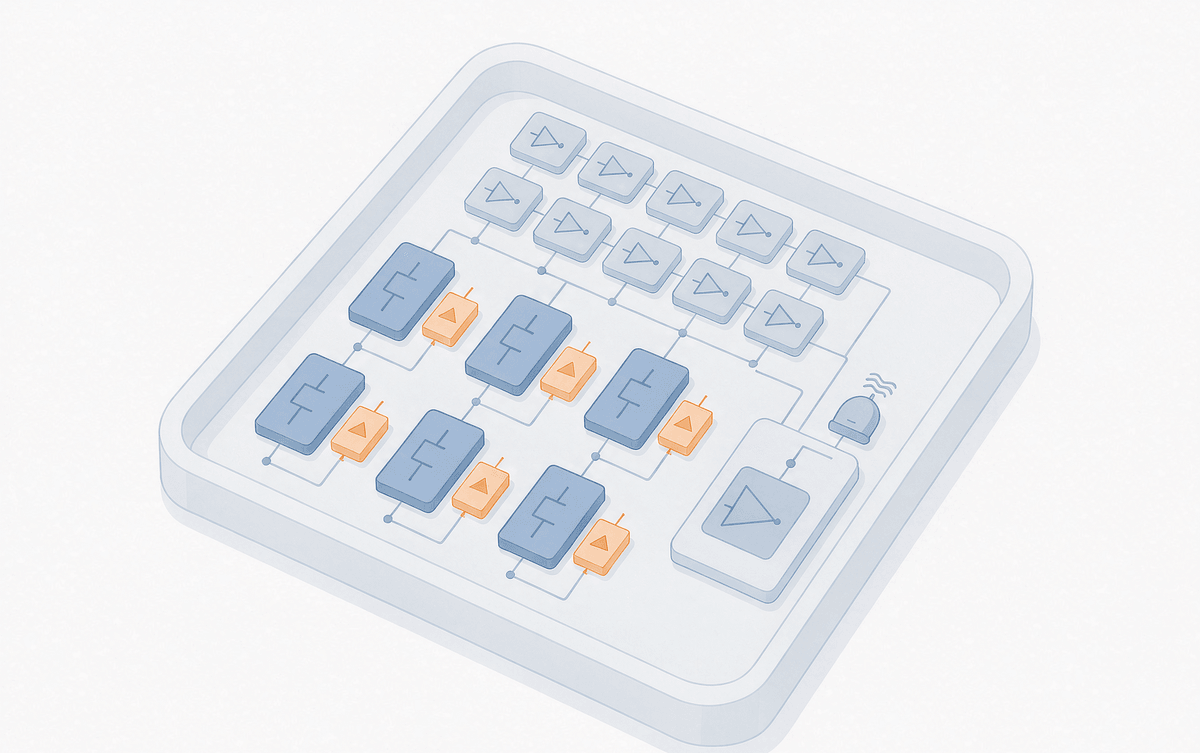
Power switching stage: six IGBTs with their freewheeling diodes form the three-phase full-bridge inverter. Common voltage classes are 600 V and 1200 V — 600 V parts fit systems with relatively lower DC-link voltages, while 1200 V devices show up more in higher-voltage industrial drives. In real projects the DC-link nominal voltage is only the starting point: startup, regenerative braking, switching transitions and sudden load changes all create voltage spikes, so reserve enough voltage margin to keep the devices inside their safe operating area.
Gate driver stage: the IPM integrates high-side and low-side drivers for the six switches, and some parts also integrate the bootstrap diodes, so the module can take PWM signals straight from an MCU or DSP — SHYSEMI's SIP29 and SIP35 series are built with this kind of integrated architecture, with typical logic levels of 3.3 V and 5 V. Integrating the driver cuts external circuitry, and more importantly shortens the path between the control circuit and the power switches, which simplifies the whole PCB design.
Protection and sensing: this is one of the most tangible advantages of an IPM over a discrete solution (the trade-offs are covered in our protection vs discrete comparison). Depending on the architecture, an IPM can integrate overcurrent protection (OC), short-circuit protection (SC), undervoltage lockout (UVLO), overtemperature protection (OT), a fault output (FO) and NTC temperature sensing. On an abnormal condition, the IPM shuts the power switches down and signals the MCU/DSP, which then disables the drive, stops the motor or runs its fault-handling sequence.
2. How the IPM Works Inside a Robot Arm Servo Drive
From the controller's PWM output to actual robot motion, the chain goes through four stages.
2.1 The Controller Generates PWM Signals
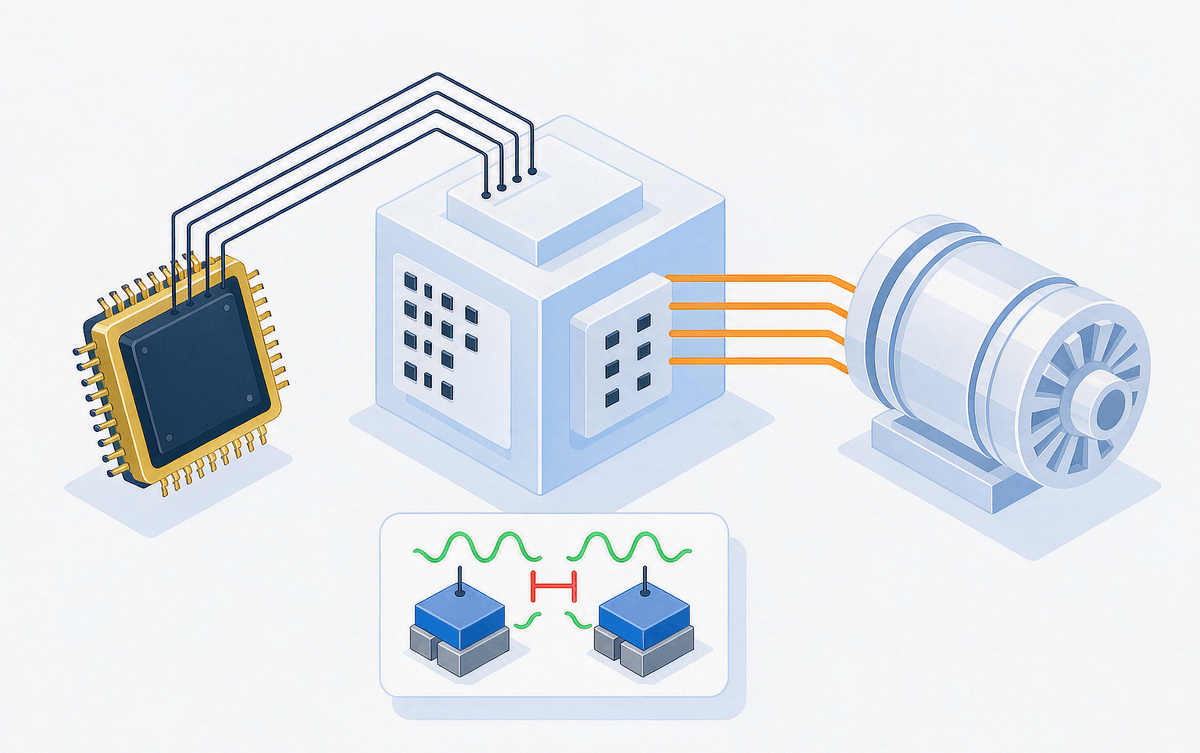
A servo controller, usually an MCU or DSP, uses encoder position, motor speed and current feedback to compute the required motor output and generate the PWM signals. A three-phase inverter needs six switching signals for the upper and lower switches of the U, V and W phases, continuously updated with the motor's operating condition. This control chain is what sets the ceiling for precision motor control.
2.2 The IPM Performs Gate Driving — Watch the Dead Time
Inside the IPM, the gate drivers process the PWM signals and drive the IGBTs or MOSFETs. The critical detail here is dead time: the upper and lower switches in the same leg must never conduct simultaneously, or shoot-through current flows straight through the DC bus and can destroy the devices. The driver therefore inserts an appropriate dead time at every switching transition. It is a trade-off — too little risks shoot-through, too much adds distortion and hurts control performance; the full analysis is in our dead-time guide.
2.3 DC-to-AC Power Conversion
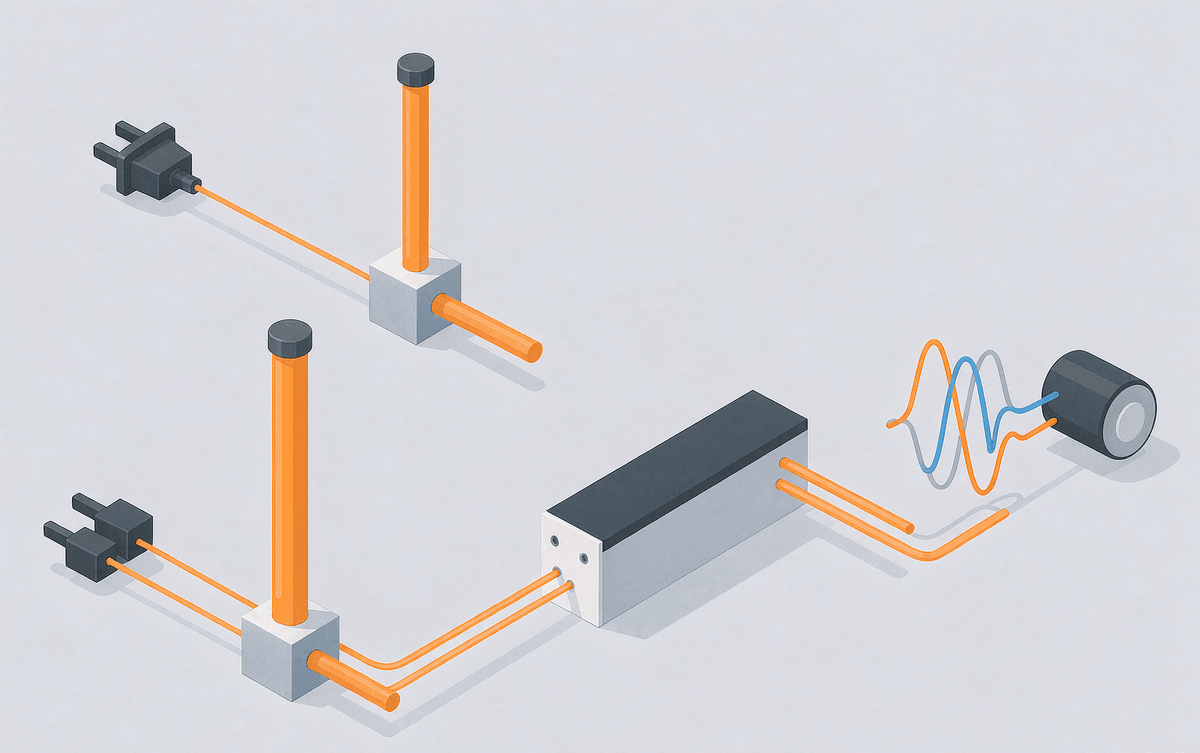
Take a 220 V AC input system: after rectification the DC-link sits around 310 V, and the IPM's three-phase inverter switches that bus at high speed, shaping the required three-phase output voltage and current through PWM modulation to drive a PMSM or other servo motor. With a 380 V-class three-phase input, the rectified DC-link is typically around 540 V — one reason 1200 V-class devices are considered in certain industrial drive architectures. Even so, the actual voltage rating should always follow the complete DC-link design, transient voltages, braking conditions and the required margin, not the nominal input alone.
2.4 Feedback and Protection

A servo drive continuously monitors both the motor and the power stage. Current sensors, encoders and DC-link voltage sensing normally live in the external control circuitry, while the IPM protects the power stage itself: on overcurrent, short circuit, undervoltage or overtemperature, it quickly disables the switches and reports back through an FO-type fault output, preventing the abnormal condition from damaging the power devices or the motor.
3. Applying a DIP29 IPM to Servo Drive Systems
SHYSEMI's SYIM50C060D2 is a 600 V / 50 A DIP29 IPM designed for power conversion and motor drive applications. It uses a DBC (Direct Bonded Copper) substrate as the power-device carrier, providing both electrical insulation and an effective thermal path for the power stage; the gate-driver IC section sits on a PCB substrate, with the electrical connections brought out through a copper lead frame. This architecture packs the power stage and the driver into a compact module, reduces external components around the power stage and makes PCB integration straightforward.
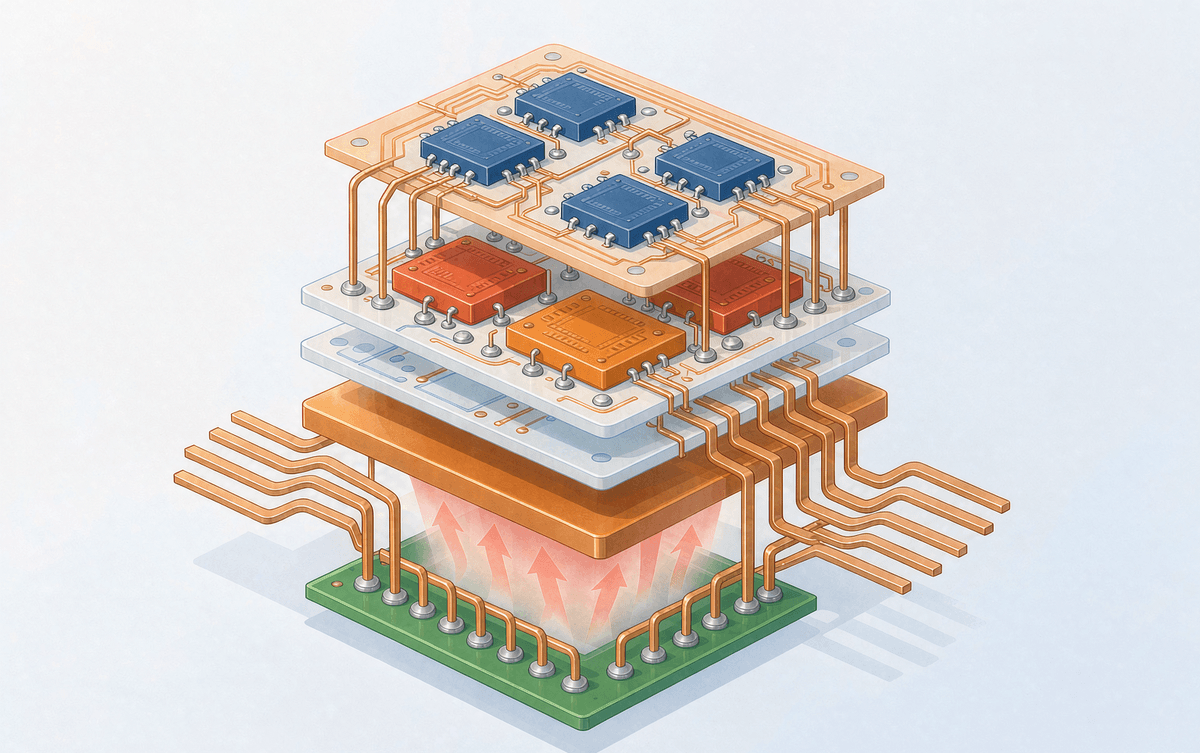
That said, whether a specific IPM suits a robot joint still comes down to the actual motor and drive conditions. The key parameters to check:
- DC-link voltage
- Motor rated current and peak current
- PWM switching frequency
- Overload duration
- Cooling conditions
- Available installation space
So don't select the SYIM50C060D2 on the 600 V / 50 A headline alone — the complete operating profile (acceleration and deceleration cycles, peak torque, overload conditions, switching frequency, thermal environment) is what decides it. For the power stage of a robot arm specifically, see our 600 V IPM guide for industrial robotic arms, and for the cost side of moving from discrete parts, when it pays to switch to IPM modules.
4. Conclusion
In a robot arm servo drive, an IPM handles three-phase inversion, gate driving and power-stage protection, and its core value is integration: power switches, drivers and protection in one module, giving you a more compact and reliable drive with less external circuitry. Keep one thing in mind, though — the IPM is not the only factor that decides robot arm performance. The final drive performance also depends closely on the MCU/DSP, the motor control algorithm, the encoder, the power-board layout, the thermal design and the motor itself.
Selection should always start from the real operating conditions, evaluating DC-link voltage, continuous and peak current, switching frequency, overload capability, conduction and switching losses, thermal resistance parameters, protection functions and package size as one set: in space-constrained robot joints, package dimensions and thermal management become the main constraints, while higher-power industrial arms make current capability, power loss and overall cooling more critical — the board-level side of that trade-off is covered in optimizing PCB design around IPM thermal performance.
If you are selecting an IPM for a robot arm, robotic joint, PMSM servo motor or multi-axis servo drive, SHYSEMI can provide suitable options and technical specifications based on your application requirements (info@shysemi.com).
