


R&D: Jack Liu
Jack once worked at Huahong Group. With his profound expertise in wafer and IGBT module design, he led our research and development efforts.The team he led was dedicated to enhancing the heat dissipation performance, conversion efficiency and durability of electric vehicles, solar inverters and industrial motor drives.
Foreword: MUR/FRD (ultra-fast recovery diodes) aren't just compatible with audio gear—they're practically indispensable for modern high-fidelity, high-power audio systems.
Their five key battlegrounds:
- Class-D amplifier freewheeling
- SMPS rectification
- PFC boost
- Resonant converters
- Snubber/clamp circuits
Audio systems demand three things from their power supply: silence, speed, and rock-solid stability. MUR (Ultra Fast Recovery Diodes) are purpose-built for exactly these high-frequency switching demands. With reverse recovery times (trr) as low as 22–38ns—miles ahead of standard FRDs that crawl along in the hundreds of nanoseconds—these devices are the unsung heroes behind today's digital, high-power audio revolution.
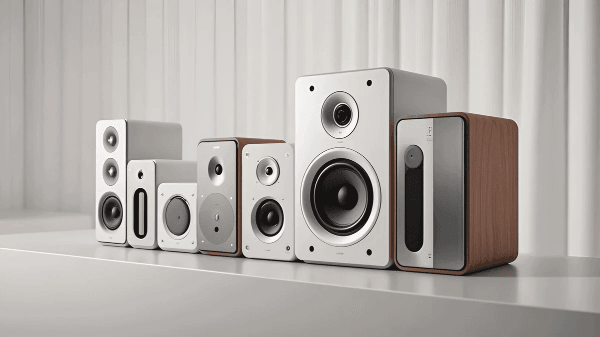
1. Where Exactly Do MUR Diodes Show Up in Audio Gear?
Modern audio splits into two camps:
- Analog (Class A / AB)
- Digital (Class D / T)
Whichever side you're on, the power supply and output stage both lean on power diodes. Here are the five battlegrounds where MUR diodes do the heavy lifting.
1.1 Class-D Amplifier H-Bridge Output — The Freewheeling Lifesaver
The H-bridge of a Class-D amplifier consists of high-speed MOSFETs or IGBTs and drives the speaker using PWM modulation at frequencies ranging from tens to hundreds of kilohertz.
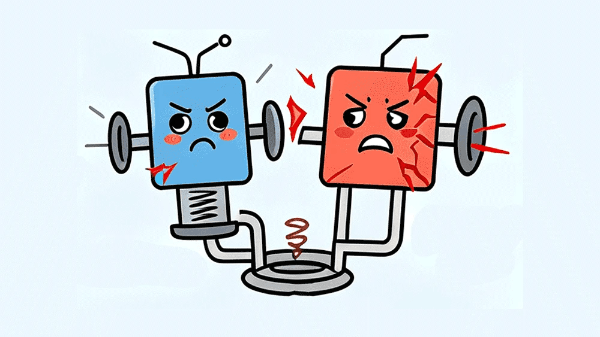
Picture this: a Class-D amp's H-bridge is hammering away at tens to hundreds of kHz, chopping PWM signals to drive your speaker. The moment one side of the bridge switches off, the inductive load (your speaker's voice coil) throws a tantrum—it absolutely insists on keeping the current flowing. If there's nowhere for that current to go, the resulting voltage spike will fry your MOSFETs faster than you can say 'expensive repair bill.' Enter the freewheeling diode: it gives that angry current a safe escape route.
1.2 Switch-Mode Power Supplies (SMPS) — Secondary Rectification & PFC
Most modern audio gear runs on flyback, forward, LLC, or half-bridge topologies, switching at 65kHz–500kHz. The secondary rectifier diode goes through a brutal cycle every single switching period: conduct, cut off, then fight its way back from reverse recovery. A plain-Jane rectifier at these frequencies? It's like bringing a bicycle to a drag race—losses pile up, efficiency tanks.
- Flyback / Forward Converters: MUR is the go-to for secondary rectification. The shorter the trr, the lower the switching loss—and your power supply stays cool. Efficiency gains of 2–5% are totally realistic.
- LLC Resonant Converters: High-end audio power supplies love this topology, and it's notoriously picky about diode reverse recovery. MUR is basically the entry ticket.
- PFC (Power Factor Correction): Professional rigs, KTV amps, cinema processors—all need PFC boost rectification. SHYSEMI's MUR6060PT and MUR8040PT are right at home here.
- DC-DC Buck/Boost: Multi-rail power supplies for DSPs, preamps, and digital boards often use MUR as protection or freewheeling companions.
1.3 Snubber & Clamp Circuits — Catching Spikes Before They Wreck Everything
Transformer leakage inductance and parasitic capacitance love to throw voltage spikes during switching transitions. A snubber/clamp circuit with a MUR diode snaps into action in nanoseconds, clamping those spikes before they reach destructive levels. The soft-recovery characteristic also keeps dV/dt in check, reducing the electromagnetic noise that can creep into your audio signal.

1.4 Preamp & Effects Rack Power Rails — Quiet Power for Sensitive Circuits
Even in the analog front end—mixing consoles, outboard effects, preamps—where currents are modest, MUR diodes still earn their keep. Those ±15V / ±18V rails need to be whisper-quiet. A diode with sloppy reverse recovery injects switching noise right into your signal path. MUR keeps it clean, so your reverb tails and vocal sibilance stay intact.
1.5 Active Speakers & Subwoofers — Packing Big Power Into Tight Spaces
Modern active monitors and subwoofers cram 500W–2000W of amplification into enclosures barely larger than a shoebox. Without ultra-efficient, low-loss diodes, the thermal design simply doesn't work.
Key Takeaway: MUR diodes don't process the audio signal directly, but every switching event they handle shapes the power delivered to your amp. Faster, cleaner switching means blacker silence between notes, tighter bass transients, and a soundstage that doesn't collapse when the kick drum hits.
2. What Do MUR Diodes Actually Do for Your Ears?
Let's get practical. Here's the 'parameter → function → what you actually hear' breakdown that connects diode specs to your listening experience.
2.1 Reverse Recovery Time (trr) — The Blacker-the-Better Spec
- Parameter: The shorter, the better. SHYSEMI MUR series hits 22–38ns. The garden-variety fast-recovery diode? 100–500ns. That's not a gap; that's a canyon.
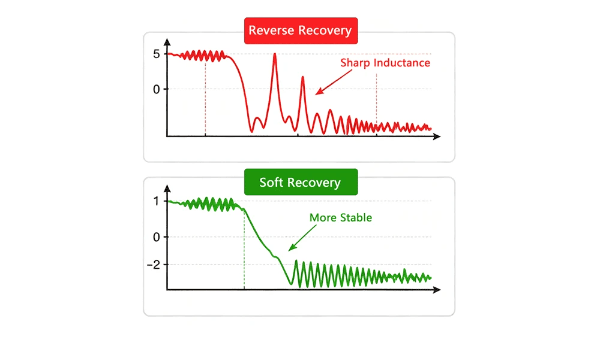
- Function: A shorter trr means the diode snaps out of reverse recovery almost instantly, with minimal reverse current and virtually no high-frequency ringing.
- What you hear: The noise floor drops into the abyss. Micro-details—the decay of a piano note, the breath before a vocal phrase.
2.2 Soft Recovery — No More Digital Harshness
- Parameter: Smooth S-factor (gentle recovery slope, no sharp corners).
- Function: Tames dV/dt and kills switching-node ringing at the source. Less ringing means less EMI radiating into your analog stages.
- What you hear: The midrange smooths out. Vocals stop sounding 'etched.' High frequencies lose that brittle, fatiguing edge. The whole presentation breathes easier, like someone opened a window in a stuffy room.
2.3 Low Forward Voltage (VF) — Efficiency That Keeps Its Cool
- Parameter: SHYSEMI MUR series typically runs 1.2–1.8V depending on current.
- Function: Lower conduction loss means less heat dumped into your chassis. The power supply runs cooler, and the fans spin slower and quieter.
- What you hear: When the symphony swells or the EDM drop hits, the amp doesn't gasp for breath. Low-end control stays authoritative and punchy instead of turning mushy under load.
2.4 High Surge Current (IFSM) — Surviving the Power-On Punch
- Parameter: SHYSEMI MUR devices are built to shrug off massive inrush currents.
- Function: When you flip the power switch, reservoir capacitors charge instantly, drawing a current spike that can dwarf normal operating levels. A wimpy diode dies young; a robust MUR just yawns and gets on with it.
- What you get: No more anxiety about cold-start failures. Your amp powers on reliably for years, not months.
2.5 Ultra-Low Reverse Leakage (IR) — The Marathon Runner
- Parameter: Glass-passivated junction keeps IR vanishingly small, even when the heatsink is toasty.
- Function: Prevents thermal runaway. The diode doesn't gradually cook itself into oblivion over long sessions.
- What you get: A Hi-Fi system that sounds the same on hour one as it does on hour ten. No drift, no degradation. Consistency is the ultimate luxury in audio.
2.6 SHYSEMI MUR Selection Cheat Sheet for Audio
Note: Parameters sourced from SHYSEMI product datasheets. Always cross-check against your actual operating frequency, bus voltage, and thermal budget before finalizing your BOM.
FAQ — The Questions You're Actually Thinking
Q: Why can't I just use a standard fast-recovery diode in my Class-D amp?
A: You can... if you enjoy replacing blown MOSFETs and listening to EMI-induced hiss.
Q: If I had to pick just one parameter to prioritize, which is it?
A: Here's the pecking order:
(1) VRRM ≥ 1.5–2× your bus voltage—survive first, optimize later;
(2) IF(AV) ≥ 1.3× your operating current—give yourself headroom;
(3) trr as short as your budget allows—this is where the magic happens;
(4) Soft recovery characteristics, low VF, and low leakage current are secondary considerations.
SHYSEMI's MUR6020PT/6030PT/6060PT/8040PT/3060PT lineup covers 200–600V, so you've got options no matter what you're building.
Q: I'm designing a pro cinema or KTV amplifier. Which MUR should I grab?
A: Match your bus voltage to the part:
For medium-power compact builds, MUR3060PT is your friend. But remember: voltage and current are just the starting point. Factor in duty cycle, switching frequency, and heatsink thermal resistance before you lock in the final choice.
© Technical Application Article · Editorial Reference · Data sourced from SHYSEMI product datasheets