

The most intuitive distinction between alternating current (AC) and direct current (DC) lies in the directional behavior of the current. SHYSEMI notes that DC is analogous to a car traveling in a single direction—flowing steadily along one path—whereas AC resembles a swinging pendulum, with the current direction reversing periodically. This fundamental difference determines their respective application scenarios and technical characteristics.
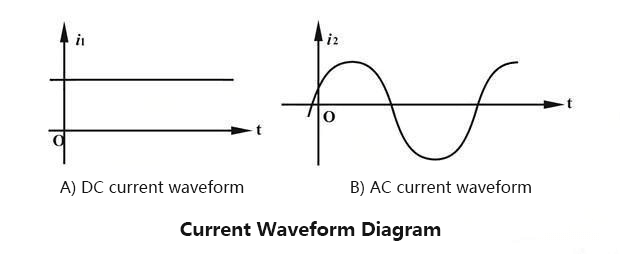
Figure 1: Waveform Comparison of Direct Current and Alternating Current
DC : The magnitude and direction of the current remain essentially constant, flowing continuously in a single direction.
What is Alternating Current?
AC : The magnitude and direction of the current vary periodically with time, alternating back and forth.
Generation Methods of AC and DC
- From an application perspective, DC is typically generated by batteries, photovoltaic (solar) panels, or DC generators, delivering a stable output voltage.
- AC is primarily produced by AC generators. Through the principle of electromagnetic induction, a rotating coil within a magnetic field generates a periodically varying current. This alternation occurs at a very high speed; under standard household conditions of 50 Hz AC, the current direction changes 100 times per second.

Figure 2:Solar Panels
Transmission Differences Between AC and DC
- In terms of transmission efficiency, AC holds a distinct advantage. Through transformers, voltage can be readily stepped up for long-distance transmission, thereby reducing line losses; upon reaching the destination, the voltage is stepped down for end-user consumption.
- Long-distance DC transmission requires complex power conversion equipment. However, with the advancement of High-Voltage Direct Current (HVDC) transmission technology, this gap is gradually narrowing.
Which is Safer: AC or DC?
Regarding safety characteristics, AC and DC each exhibit distinct properties.
- Due to its periodic zero-crossing, AC provides an opportunity for muscle relaxation upon electric shock. In contrast, the sustained stimulation of DC may cause continuous muscle contraction, making it more difficult to break free.
- Nevertheless, the extinction of electrical arcs in high-voltage DC is more challenging than in AC, which requires special consideration in switchgear design.
Application Fields of AC and DC
- DC dominates in electronic devices, electric vehicles (EVs), and electrolytic industries, where a stable and consistent power supply is required.
- AC is primarily utilized in household appliances, industrial motors, and grid transmission and distribution systems.
In modern power systems, the two are often deployed in coordination to leverage their respective strengths. The future trend in power system development points toward hybrid AC/DC grids. High-voltage direct current transmission is employed for long-distance, high-capacity power transfer; AC distribution networks facilitate flexible power allocation; and DC microgrids supply specific loads. This hybrid architecture balances efficiency, flexibility, and reliability.
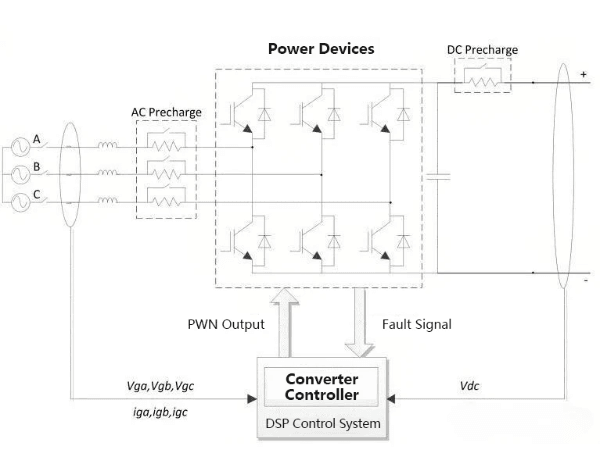
Figure 3: Converter DSP Control System
Understanding the differences between AC and DC not only promotes safe electricity usage but also provides better insight into the direction of power technology development. As technological progress continues, the boundaries between these two current forms are becoming increasingly blurred; however, their fundamental physical distinctions will persist for the foreseeable future.
Industry Q&A:
Q: Are the measurement standards for DC and AC identical?
A: No. Measuring instruments are designed differently depending on the current type. DC meters measure the average value, whereas AC meters typically measure the root mean square (RMS) value. The RMS value is defined as the DC equivalent that produces the same thermal effect—this is the meaning behind the commonly cited 220V AC rating.
Q: How is energy stored in DC and AC systems?
A: DC can be stored directly in devices such as batteries and capacitors. AC, however, must first be rectified into DC for storage and then converted back to AC via an inverter when needed. This is one of the primary reasons why DC technology is widely adopted in renewable energy systems.