


R&D: Jack Liu
Jack once worked at Huahong Group. With his profound expertise in wafer and IGBT module design, he led our research and development efforts.The team he led was dedicated to enhancing the heat dissipation performance, conversion efficiency and durability of electric vehicles, solar inverters and industrial motor drives.
What is freewheeling diode?
The term "Freewheeling Diode" is a literal translation from English. In the industry, it's commonly known as a "Flyback Diode" or "Freewheeling/Flywheel Diode," abbreviated as FWD. Many power electronics datasheets and IGBT module documents stick with this literal translation, so don't be surprised when you see "freewheeling" everywhere — it's not talking about a bicycle!
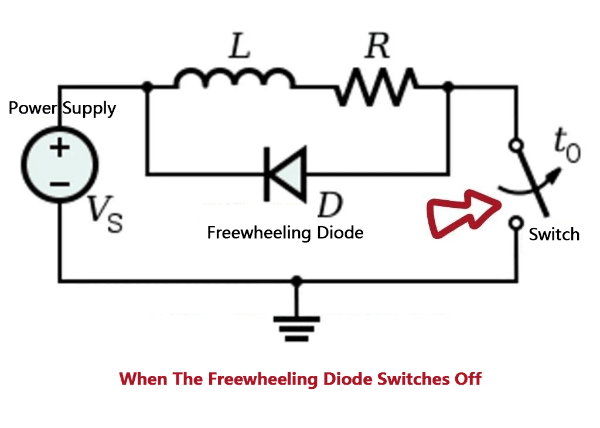
1. So, What Does It Actually Do?
Picture this: you have an inductor (or a motor winding, relay coil, transformer) — You connect a diode in reverse parallel across this inductive load.
Its one and only job? No, when the switch suddenly snaps open, it gives all that stored magnetic energy a safe escape route — preventing it from throwing a tantrum in the form of a massive voltage spike that would otherwise fry your MOSFET, IGBT, or transistor faster than you can say "Oops."
Why "Freewheeling"? Think of inductor current like a spinning flywheel — it has inertia and simply refuses to stop on a dime. The diode provides a closed loop where the current can keep "freewheeling" (spinning down gently) instead of crashing into your switch device.
2. The Physics Behind It (Don't Worry, It's Simple!)
The inductor's voltage-current relationship is beautifully stubborn:
V = L × (di/dt)
Translation: an inductor's current absolutely, positively refuses to change instantaneously.
Here's what happens when you flip the switch off:
- The current tries to drop to zero in a hurry (di/dt goes through the roof).
- The inductor throws a fit and generates a massive reverse voltage spike, desperately trying to maintain the current flow.
- Without a discharge path, that spike can reach thousands of volts and turn your precious switch into expensive confetti. The freewheeling diode is basically a safety slide for that inertial current to glide down gently.
3. How the Circuit Works (A Tale of Two Phases)
Phase 1: Switch ON (Steady-State Chill Mode)
- Current path: DC Source → Inductive Load → Switch → GND
- Diode status: Reverse-biased and cut off — Virtually no current, not interfering with the main circuit.
- Inductor status: Inductor stores energy in a magnetic field.
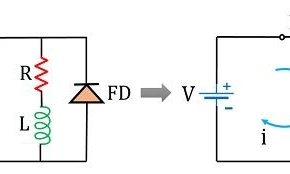
Phase 2: Switch OFF (The Freewheeling Rescue)
- Power path: Cut off. The polarity of the induced EMF in the inductor reverses.
- The induced voltage flips the diode into forward conduction.
- A closed loop forms: Inductor → Freewheeling Diode → Inductor.
- The energy gradually dissipates within the loop, and the current decays smoothly to zero.
✅ Result: The voltage across the switch gets clamped, and that voltage spike vanished.
RED ALERT — Don't Flip the Polarity!
If you wire the diode backwards, the power supply will short-circuit straight through it. The result? Your components turn into miniature volcanoes.
The correct way: diode cathode (the bar) connects to the load's high-voltage side, anode to the low-voltage side — reverse parallel across the load.
4. With vs. Without: The Waveform Showdown
Without a Freewheeling Diode
When the switch turns off, you'll see a massive voltage spike—we're talking 5 to 50 times the supply voltage! It can easily blow up the power switch.
With a Freewheeling Diode
The voltage across the inductor gets clamped right at the diode's forward drop (around 0.7V for silicon, 0.3V for Schottky). The voltage spike completely disappears, and the current ramps down smoothly.
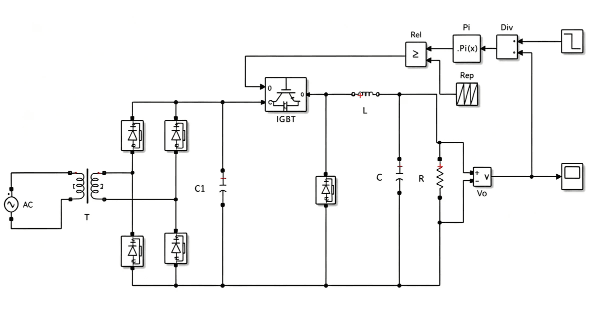
Schematic of Buck converter freewheeling waveform
5. Where You'll Find Them in the Life
Scene 1: Low-Voltage Industrial Control — Relays & Solenoids
Relay coils are classic inductive loads. When your microcontroller drives a coil through a transistor, you must slap a 1N4007 freewheeling diode across those coil terminals. This is the most classic in embedded systems.
Scene 2: Power Semiconductors — IGBT / MOSFET Motor Drives
- Inverters and EV motor drives use IGBT modules with built-in anti-parallel freewheeling diodes.
- Motors are inductive loads. When the IGBT turns off, winding current relies on these diodes to keep flowing.
- SiC MOSFET modules often lack a usable body diode. For high-frequency operation, you'll need external SiC Schottky freewheeling diodes to eliminate reverse recovery losses.
6. How to Pick the Right Diode
Three Golden Rules for Selection:
- Forward average current ≥ maximum continuous load current (with some headroom).
- Reverse voltage rating ≥ 1.5~2× the DC bus voltage (with enough safety margin).
- Reverse recovery time (trr): the higher frequency need the faster recovery model
8. Freewheeling Diode vs. RC Snubber
Both are designed to tame inductive voltage spikes, but they have different personalities:
- Freewheeling Diode: Low cost, unidirectional, perfect for sustained freewheeling current. The go-to choice for most inductive switching applications.
- RC Snubber: Great for AC and bidirectional voltage spikes. Usually teams up with diodes for combo protection.
FAQ — YES OR NO
❌ NO: "MOSFETs have built-in body diodes, so I can skip the external freewheeling diode."
✅ YES: Standard silicon MOSFET body diodes have poor reverse recovery characteristics. In high-frequency, high-power scenarios, the losses are brutal. They're fine for low-frequency emergencies, but don't rely on them long-term. And SiC MOSFET body diodes? Absolutely forbidden as freewheeling diodes.
❌ NO: "Resistive loads need freewheeling diodes"
✅ YES: Pure resistors don't store magnetic energy. No stored energy means no counter-EMF. No counter-EMF means no need for a freewheeling diode.
❌ NO: "Freewheeling diodes only protect the switch."
✅ YES: They do way more than that! They also smooth load current, reduce EMI (electromagnetic interference), and minimize contact arcing on relays.