

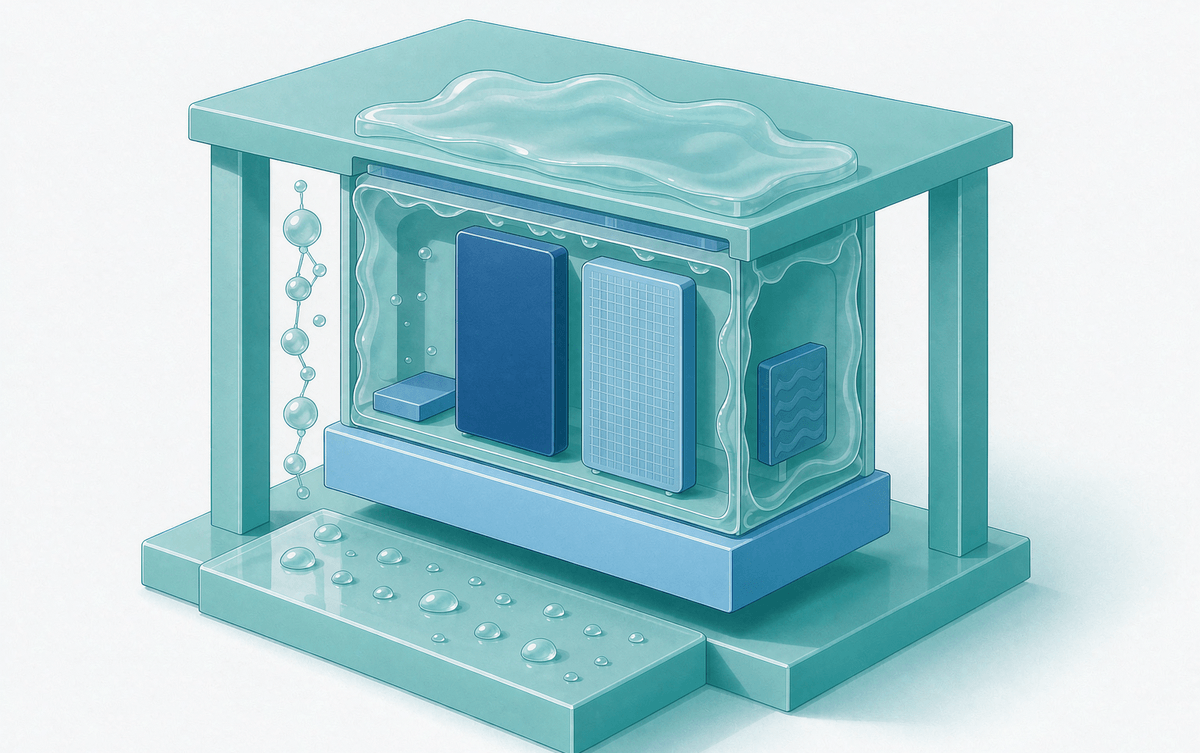
Here is a fact that surprises many system engineers: an IGBT module on your heatsink is not hermetically sealed. There is a silicone gel layer over the chips, but water vapor can still migrate through the housing gaps and the gel itself. Moisture plus voltage is a slow-motion failure mechanism — which is why storage and operating climate conditions matter, and why the industry leans on IEC 60721-3-3 to define them.
The Five Climate Classes, in Plain Terms
| Class | Temperature | Humidity | Typical place |
| 3K20 | Continuously controlled | Continuously controlled | Occupied indoor spaces |
| 3K21 | Controlled | Not continuously controlled | Machine rooms, data centers |
| 3K22 | Controlled | Not controlled | General industrial enclosures |
| 3K23 | Not controlled | Not controlled, freezing possible | Sheds, unheated rooms |
| 3K24 | Not controlled | Not controlled, open air | Outdoor equipment |
Most industrial variable-frequency drives are specified against 3K22, and the reliability qualification for the power modules is run under the same envelope. Beyond temperature and pressure, 3K22 constrains relative humidity to 5%–85% with no condensation allowed, and absolute humidity up to 25 g/m³.
Relative vs. Absolute Humidity — the Part Everyone Forgets
Relative humidity depends on temperature even when the amount of water in the air does not change. Warm the air and its water-holding capacity grows, so RH drops; cool it and RH climbs toward saturation. That single piece of physics explains most condensation accidents in the field: a drive that ran within spec all day hits dew point at night when the cabinet cools down. If you have seen brownish corrosion or leakage-current alarms after a humid weekend, this is usually the story.
Self-Heating Is Your Friend (Sometimes)
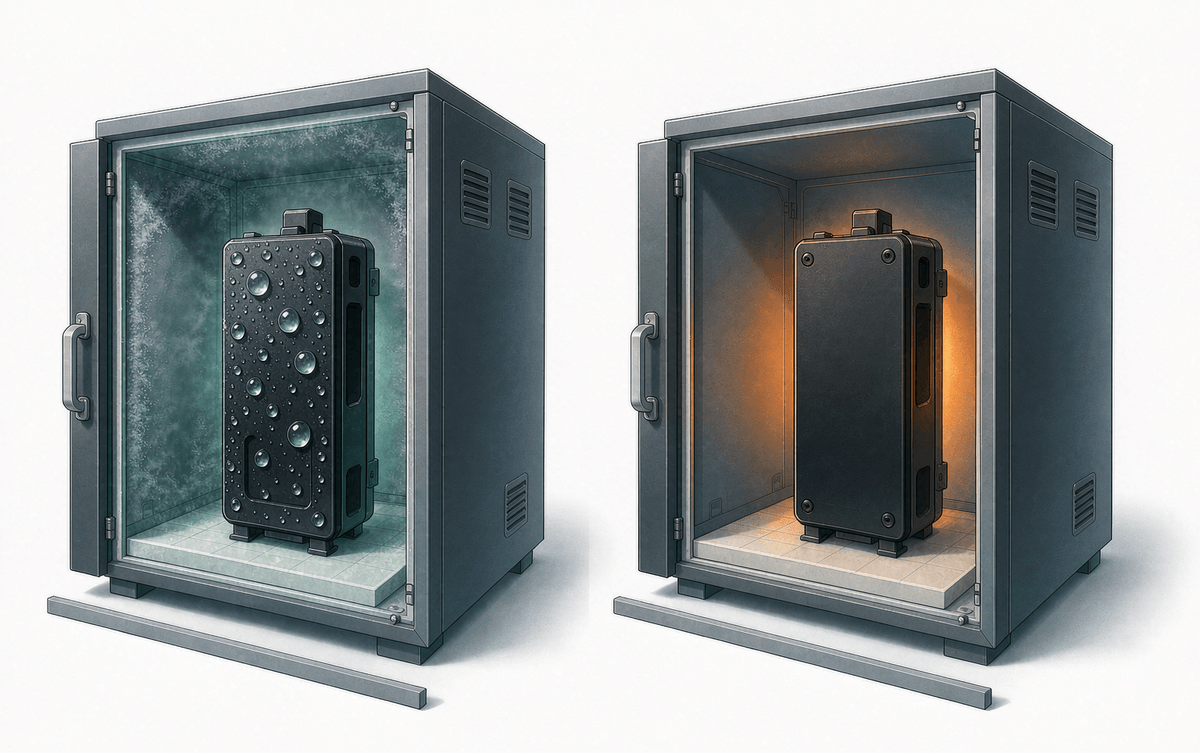
Here is the counterintuitive part: a working drive dries itself. Absolute humidity stays constant while the enclosure warms up, so relative humidity falls — a cabinet at 85% RH and 12–33 °C can drop to roughly 50% RH with just 10 °C of self-heating, and near 30% with 20 °C. This is exactly why the operating envelope in the datasheet looks generous: it assumes the module is running and warm. The dangerous state is powered off in a humid environment — that is when the module sits near ambient temperature and RH, with nothing pushing moisture out.
Practical Rules for Design and Service
- Storage: keep modules in their moisture-barrier bags until installation; after long storage in humid conditions, bake or warm up per the package's moisture sensitivity guidance before applying power.
- Cold start: if the cabinet has been sitting cold and humid, warm the interior before energizing the power stage — an anti-condensation heater is cheap insurance.
- Monitor: a temperature/humidity sensor inside the cabinet plus the module's own NTC gives you the full picture; see our NTC measurement guide.
- Thermal cycling: humidity and temperature swings compound — our note on why high-voltage IGBTs hate sudden temperature changes explains the stress mechanism.
- Sealing: for outdoor boxes (3K24 territory), manage drainage and breathing, not just ingress protection ratings.
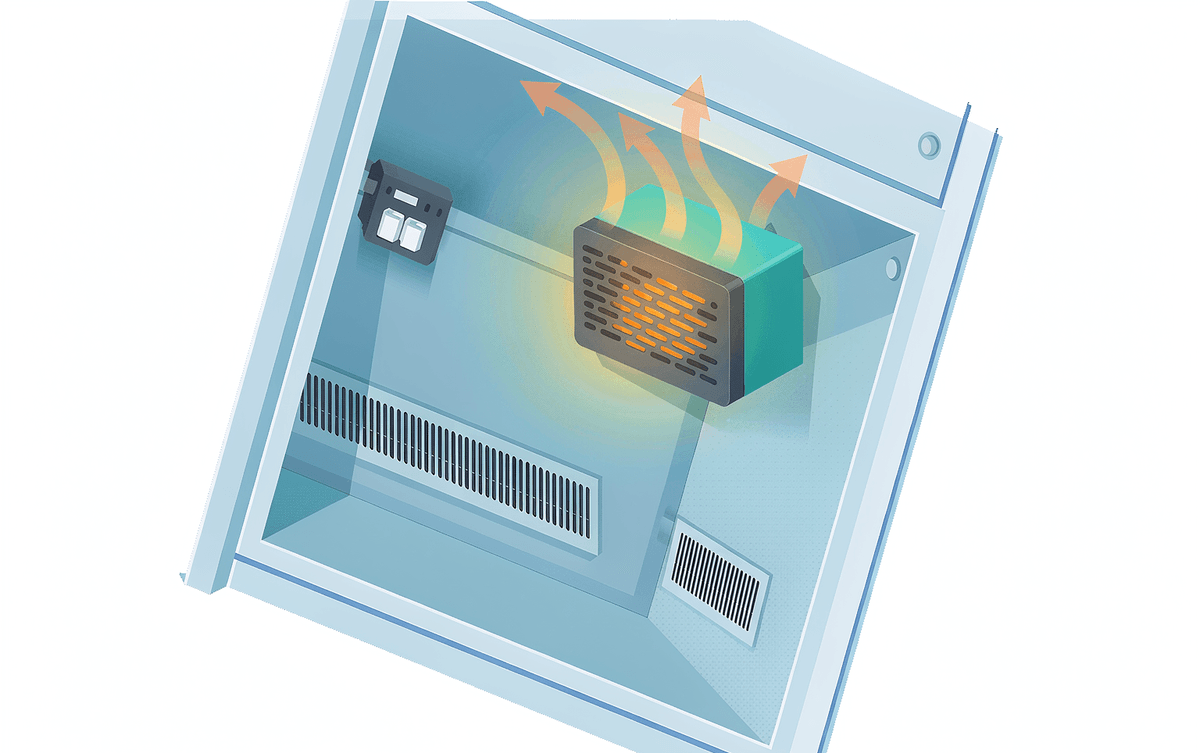
Humidity rarely kills a module in a day; it sets up the conditions for corrosion, leakage and eventual failure modes you will find in our IPM failure modes overview. Keep the cabinet warm, keep it breathing, and respect the 5–85% envelope — that is 90% of the practice.
