

The first wall everyone hits when comparing IPM part numbers: none of the vendors use the same naming. Mitsubishi's DIP IPM, Infineon's CIPOS, ST's SLLIMM, onsemi's SPM and SHYSEMI's DIP/SIP lines are each tiered by their own product logic, so there is no honest answer to 'how many IPM packages exist' as one number. But classify them by package form and mounting style and you get five mainstream families; subdivide those by size and power tier and you land at roughly 20+ specific series across vendors. Once you are clear on what an IPM actually is, the package picture gets much easier to read.
1. First, Separate Two Things: Package Form Is Not Internal Topology
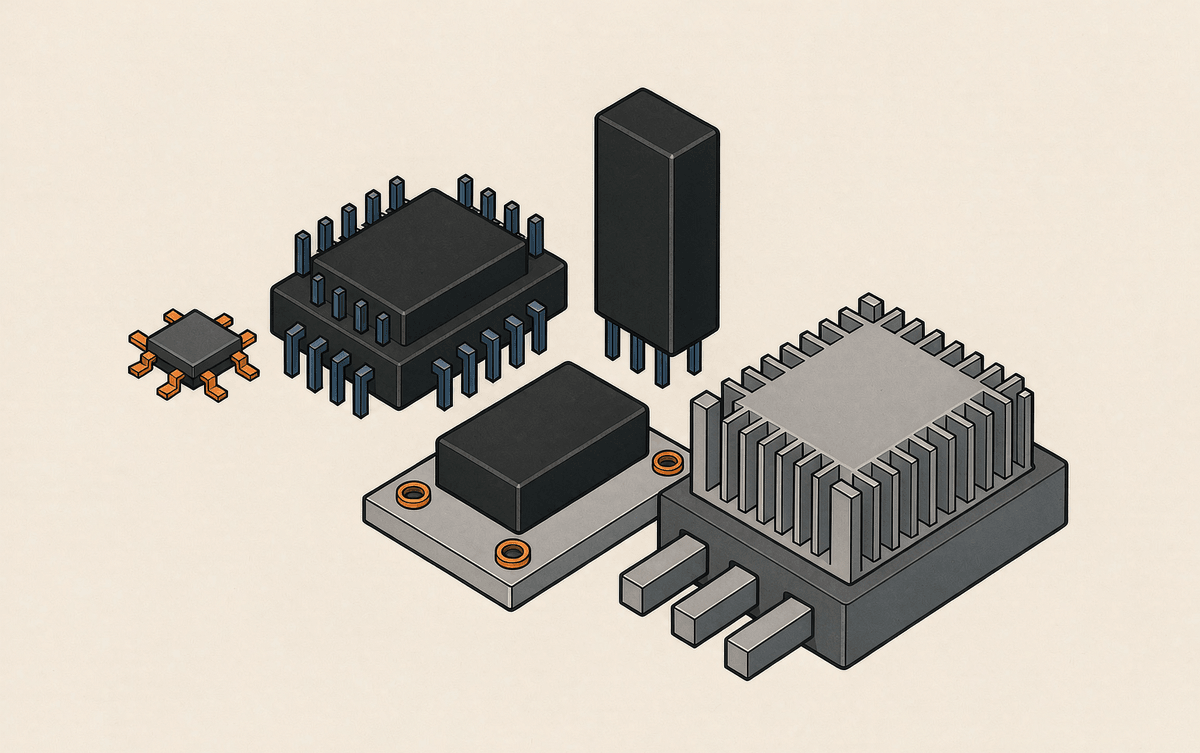
A lot of material mixes topology into package talk, so let's clear that first: topology describes how many switch units are inside and what circuit they form; the package describes what the module looks like and how it mounts to the board. The same six-unit topology can come as SOP, DIP or SIP, or as a large screw-mounted module with a baseplate — form factor and circuit are two different dimensions.

- 6-unit (6-in-1): six IGBTs forming a three-phase inverter — the workhorse motor-drive IPM;
- 7-unit: the six inverter switches plus one PFC switch (the DIPPFC type), doing PFC and inversion from one module;
- 2-unit (2-in-1): a half bridge, used for single-phase supplies or half-bridge motors — the selection logic differs from half-bridge and full-bridge modules;
- 1-unit: a single-switch IPM, fairly rare.
The 7-unit route has been getting a lot of attention lately, driven by tighter harmonic and power-factor requirements on the appliance side — we covered that in our PFC-integration post.
2. The Five Mainstream Families by Mounting Style
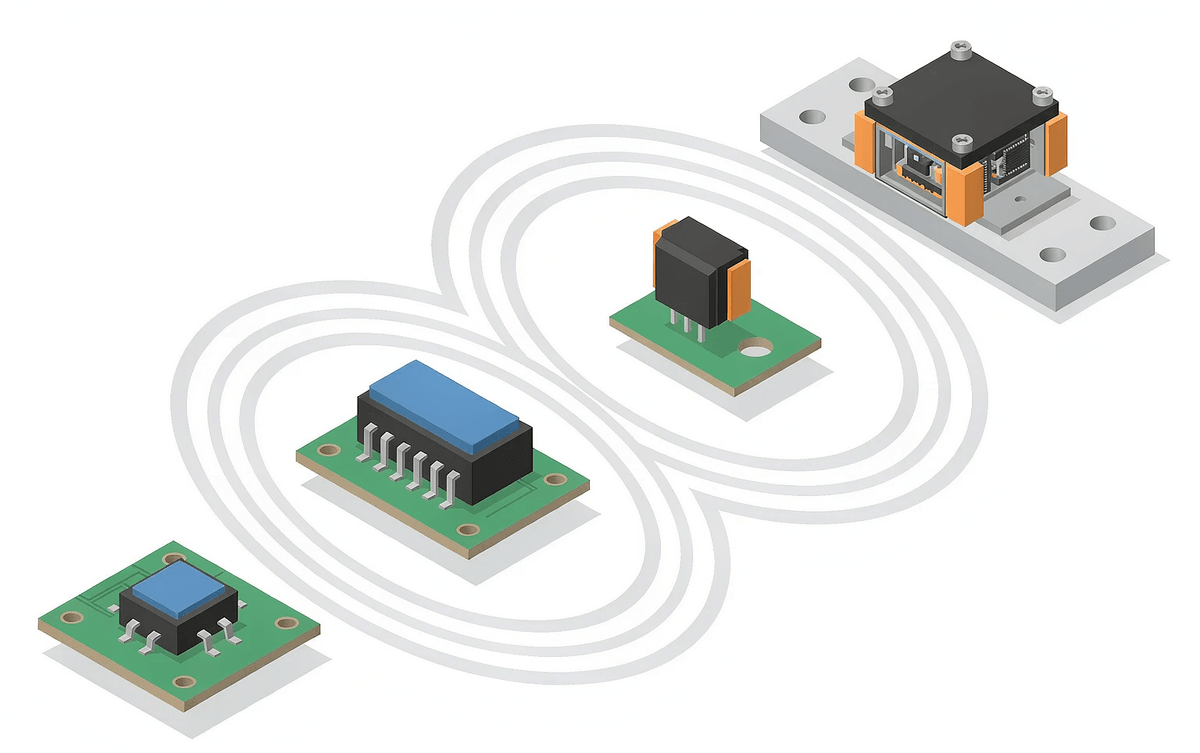
| Family | Mounting | Typical power | Representative series |
| 1. SMD surface-mount | Reflow (SOP/PQFN) | ≤200 W | Mitsubishi SOPIPM, onsemi SPM7/SPM5-S, ST SLLIMM nano |
| 2. DIP molded dual in-line | Through-hole, transfer mold | Tens of W to several kW | Mitsubishi DIPIPM family, onsemi Compact IPM / SPM8, SHYSEMI |
| 3. SIP single in-line | Single in-line, stand-up | ≤1 kW | onsemi SIP-K / SIP1A / SIP05F / SIP2A, SHYSEMI |
| 4. Screw-mounted power modules | Baseplate + screw holes | 1 kW to tens of kW | onsemi SPM45/SPM31/SPM49, Mitsubishi G1/V1, Fuji X/V series |
| 5. Combo / PIM integrated | Built-in rectifier + PFC + inverter (CIB) | Follows the tier | DIPIPM+, SIP2A, Fuji Small PIM, SHYSEMI |
One-line memory: SMD handles small power and loves automated lines; through-hole balances heat and serviceability; baseplate-and-screws is where power goes up; CIB packs rectifier, PFC and inverter into one case and saves the most external parts.
3. DIP-IPM: the De Facto Standard for Home Appliance Inverters
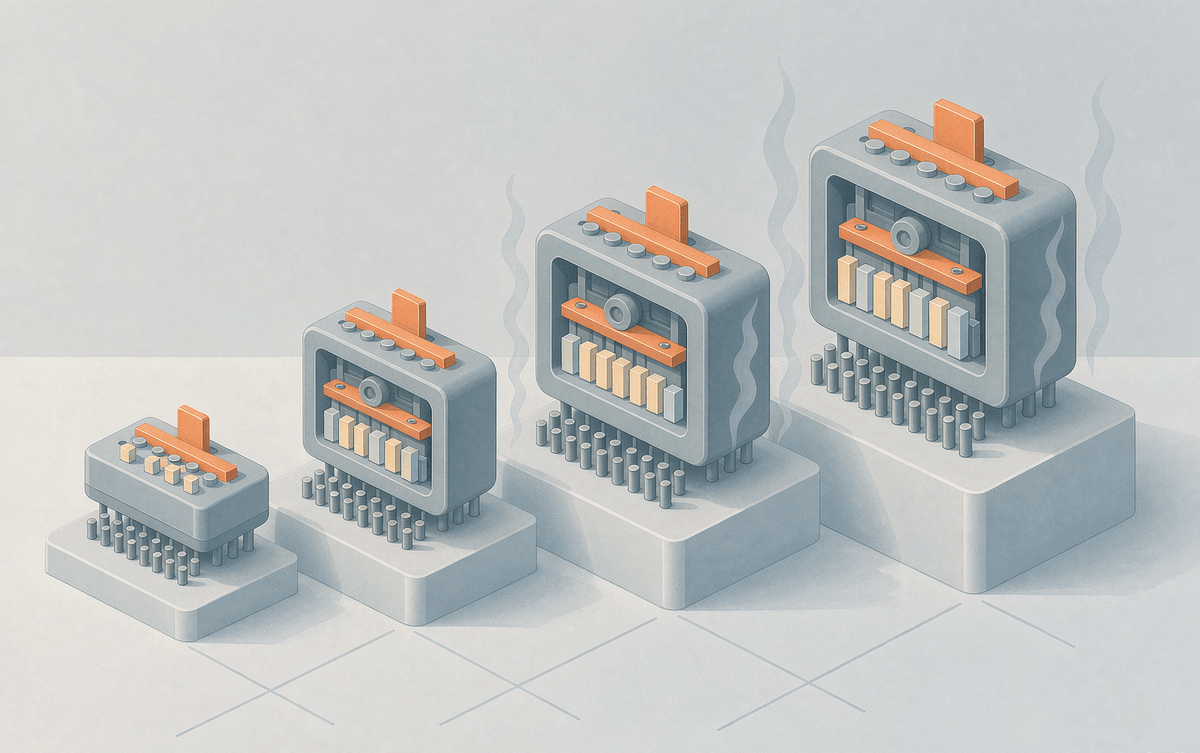
DIP-IPM is the workhorse of home-appliance and variable-frequency designs, and it is SHYSEMI's main product line. From small to large, the mainstream splits into four tiers; the concrete packages behind them (DIP-23/24/25/26/29 and SIP-35) are all listed on our product pages.
| Tier | Rating | Common cross-reference series |
| SOP IPM | 600 V / 3–6 A | Silan, CR Micro |
| Compact DIP IPM | 600 V / 6–15 A | onsemi SPM8, Mitsubishi SLIMDIP |
| Mini DIP IPM | 650 V / 15–50 A | Mitsubishi super mini, Fairchild FNA41560, Mitsubishi PSS15S92F6-AG, Fuji 6MBP15RH060, Sanken SCM1242MF and similar 6-unit power modules |
| SIP IPM+ (CIB type) | 600 V / 15–20 A | Built-in rectifier + brake, fewer external parts |
One caveat: cross-referencing is only valid at the tier level — any actual replacement has to be confirmed line by line from the datasheet; our post on the parameters that really matter in an IPM datasheet is the checklist. SHYSEMI's equivalents start from the DIP29 series and the SIP35 series.
4. How the Vendors' Package Series Line Up
Each vendor names things its own way, so let's align the vocabulary first:
- Mitsubishi: DIPIPM, SLIMDIP, SOPIPM, DIPPFC (with PFC);
- Infineon CIPOS: Nano (small SMD) → Micro → Mini → Maxi (high-power DBC);
- ST SLLIMM: SLLIMM nano (low-power through-hole/SMD) and SLLIMM HP (high-power DBC through-hole);
- onsemi SPM: SPM3/SPM5/SPM7/SPM8, SMD types with huge volume in appliance inverters;
- Fuji V-IPM: the V series, molded package on a DBC substrate, aimed at industrial drives.
Using onsemi as the example, the ladder from small to large looks roughly like this — handy for matching against your own power target:
- SPM7 (PQFN 12.9×12.9 mm) → up to 80 W;
- SPM5 (SMD / DIP / Double DIP suffixes) → up to 200 W;
- SPM8 (fully molded, screw holes) → around 300 W;
- SIP-K / Compact IPM DIP-S6 (29.6×18.2 mm) → around 1 kW;
- SPM45 (ceramic substrate) → 1–3 kW;
- SPM31 / SPM3V / ASPM27 (Al&sub2;O&sub3;/AlN substrates) → around 7 kW (ASPM27 is the AQG324 automotive grade);
- SPM49 / SPM34 / ASPM34 → around 10 kW.
5. Quick Selection Comparison
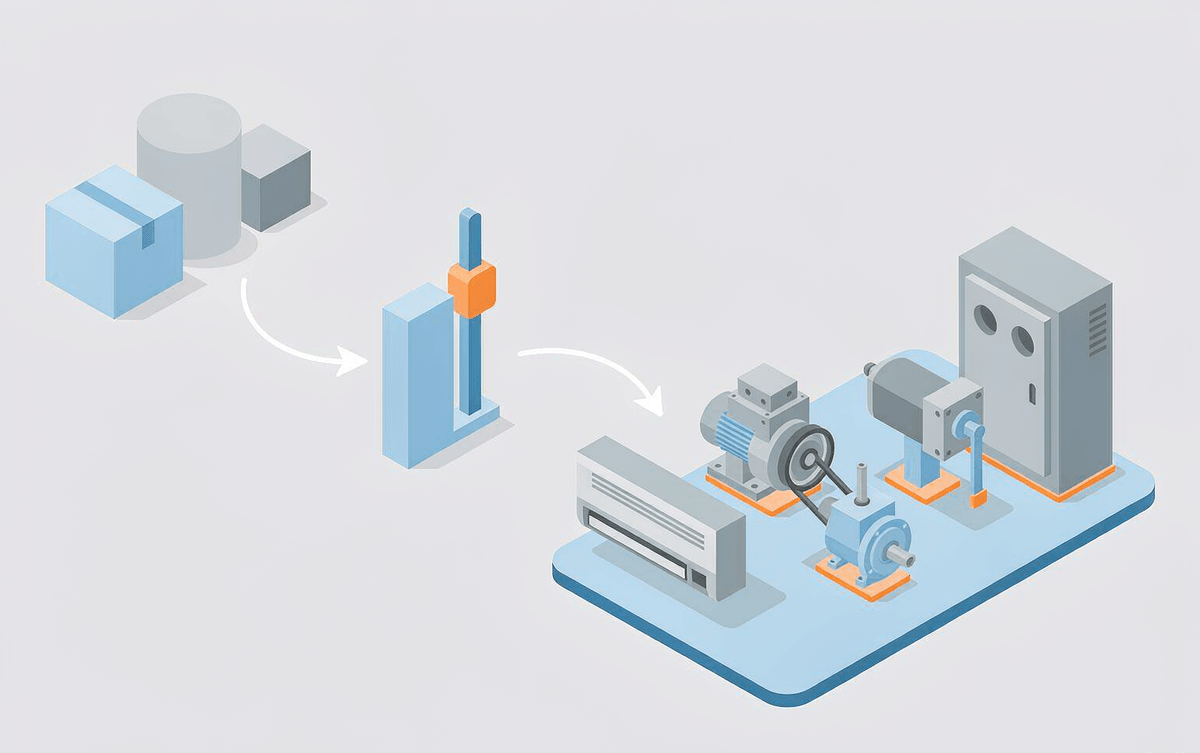
| Package type | Mounting | Substrate | Current range | Strengths | Typical uses |
| DIPIPM | Through-hole | Lead frame | 5–50 A | Good heat, easy to service | ACs, washing machines, pumps |
| SLIMDIP | Through-hole | Lead frame | 3–20 A | Ultra-slim, compact | Slim appliances |
| SOPIPM / SPM | SMD | Lead frame | 2–10 A | Small PCB footprint, SMT volume | Fridges, micro fans |
| DBC molded IPM (CIPOS Maxi / SLLIMM HP / V-IPM) | Through-hole + screws | DBC ceramic | 20 A to 100 A class | High heat capacity, high reliability | Industrial servo, elevators, storage |
Current range is only the first filter — heat is what actually decides it: lead-frame and DBC substrates differ by roughly an order of magnitude in thermal resistance, so read the thermal resistance parameters alongside the current rating; and once it's on the board, PCB layout matters just as much for thermals and EMI.
6. Three Steps to a Concrete Package
- Step 1, fix the topology: three-phase motor drive starts at 6-unit; add PFC with a 7-unit part or a discrete PFC stage;
- Step 2, fix mounting style and power tier: use the comparison table above to cut the candidates down to one or two tiers;
- Step 3, verify against the datasheet: DC-link margin, continuous/peak current, switching frequency, overload duration, cooling and installation space, item by item — the general industrial framework is in selecting an IPM for industrial inverter applications, and servo-class dynamic requirements get their own treatment in IPMs in servo motor applications.
7. Bottom Line
IPM packages look messy because three layers stack on top of each other: topology → mounting style → size/power tier. Fix the topology and power tier first, narrow the package candidates to one or two tiers, then confirm from the datasheet and final appliance testing — vendor naming stops being confusing. SHYSEMI covers the three mainstream families (SOP, DIP, SIP) from 600 V / 3 A up to 650 V / 50 A; if you are selecting for an inverter appliance, industrial drive or servo project, start from the product pages or reach us at info@shysemi.com for selection support.
