

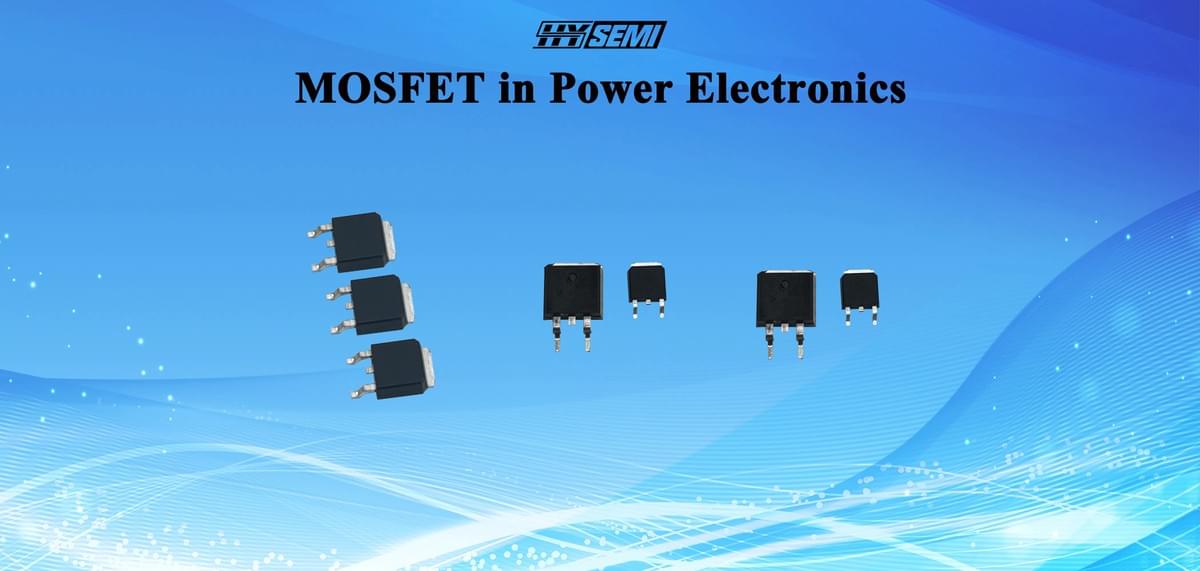
Power electronics shape how we control and convert energy in devices. At the heart of this technology lies the MOSFET in power electronics—a tiny but mighty component. But what is a MOSFET transistor? It’s a semiconductor device that switches or amplifies electrical signals efficiently. In power systems, MOSFETs enable faster, smarter energy control.
This article explores why MOSFET in power electronics is crucial, how it works as a switch, and where it’s used.
What Is a MOSFET Transistor?
A MOSFET (Metal-Oxide-Semiconductor Field-Effect Transistor) is a key electronic component. It has three main parts:
- Gate (G): Controls the flow of current.
- Source (S): Where current enters.
- Drain (D): Where current exits.
When voltage is applied to the gate, it creates an electric field that allows or blocks current. This makes MOSFETs ideal for fast switching.
What do MOSFETs do? They regulate power efficiently in circuits, from tiny chips to massive industrial systems.
Why MOSFET in Power Electronics?
Power electronics need devices that handle high voltage and switch quickly. Here’s why MOSFETs excel:
1. Fast Switching Speeds
MOSFETs turn on/off in nanoseconds. This reduces energy loss in high-frequency circuits.
2. High Efficiency
They waste less power as heat compared to older transistors.
3. Low Drive Power
MOSFETs need minimal gate current to operate, saving energy.
4. Scalability
They work in small gadgets (like smartphones) and big systems (like solar inverters).
MOSFET as a Switch
One of the biggest uses of MOSFET in power electronics is switching.
How Does a MOSFET Switch Work?
- Off State: No voltage at the gate → No current flows.
- On State: Voltage applied → Current flows freely.
This simple on/off action allows precise control in:
- Power supplies
- Motor controllers
- LED drivers
What are MOSFETs used for in switching? They manage power flow in everything from laptops to electric cars.
MOSFETs are everywhere in power electronics. Key applications include:
They step up or down voltage efficiently in power adapters.
2. Motor Drives
MOSFETs control speed in drones, EVs, and industrial machines.
3. Solar Inverters
They convert solar panel DC power into usable AC power.
4. Wireless Charging
MOSFETs enable fast, efficient energy transfer in chargers.
5. Power Amplifiers
Used in audio and radio frequency (RF) systems.

MOSFET vs. Other Power Devices
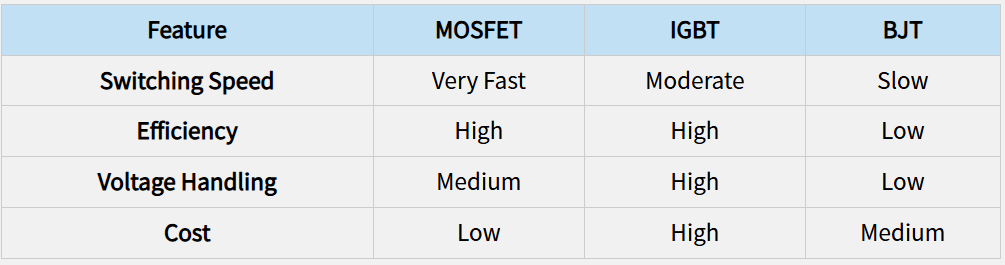
How does a MOSFET in power electronics compare to alternatives like IGBTs or BJTs?
Future of MOSFET in Power Electronics
New advancements are making MOSFETs even better:
- Wider Bandgap Materials (SiC/GaN): Handle higher voltages with less loss.
- Smarter Integration: Built-in protection against overheating.
- Miniaturization: Smaller chips with higher power density.
These innovations will push MOSFET in power electronics into next-gen energy systems.
Conclusion
The MOSFET in power electronics is a game-changer. It offers fast switching, high efficiency, and reliability. We’ve covered what is a MOSFET transistor, how it works as a switch, and its top applications. From solar inverters to electric cars, MOSFETs power our world. Understanding what do MOSFETs do helps engineers design better, greener energy systems.