

The reflex is understandable: a TO-220 IGBT costs a couple of dollars, an IPM module costs thirty. Six transistors versus one module, discrete wins — case closed. Except the module price is one line on a bill that also includes gate drivers, optocouplers, bootstrap parts, layout hours, EMC re-spins, yield loss and warranty returns. When our technical comparison of IPM and discrete comes up in customer meetings, the cost question always follows, so this article puts real numbers on it — for a 15 A / 600 V three-phase drive, the most common crossover point.
The BOM Math for a 15 A / 600 V Drive
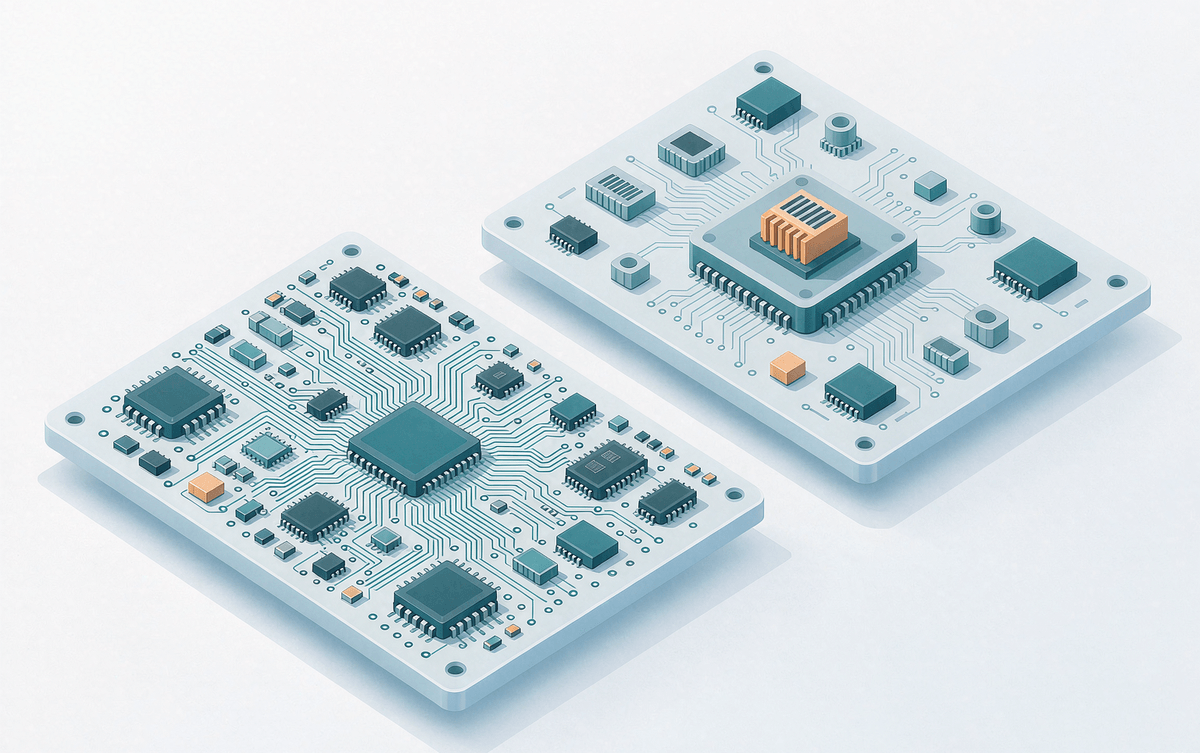
| Discrete build | Qty | Subtotal |
| IGBTs, 600 V / 15 A TO-220 | 6 | ¥15.0 |
| 3-phase gate driver ICs | 3 | ¥9.0 |
| High-speed optocouplers | 3 | ¥4.5 |
| Bootstrap diodes / capacitors | 3 + 3 | ¥1.5 |
| Gate, sense and decoupling R/C | 24 | ¥2.4 |
| TVS / ESD protection | 6 | ¥1.2 |
| Total | 48 parts | ≈ ¥33.6 |
Add the protection and filtering stages most designs end up needing and the count lands at 50–60 parts, ¥35–40 in practice. The IPM side of the same function: one SYIM756C-SAT (¥32.0) plus a handful of decoupling and bootstrap capacitors — 7 parts, about ¥32.9. So at the component level it is already a wash or better, before you count the second-order effects: one supplier instead of ten, one part number on your ERP instead of fifty, and fifty stocking and obsolescence risks collapsed into one. That is the point where the argument usually flips for a purchasing manager, and it is also why industrial motor drives keep consolidating around IPMs.
The Costs That Never Show Up on the BOM
| Effort | Discrete | With IPM |
| Power stage + gate drive design | 4 person-months | Reference design port: 0.5 |
| Protection circuits | 1.5 person-months | In the module |
| PCB layout (isolation, EMC) | 1 person-month | 0.5, from reference layout |
| Debug, thermal, EMC iteration | 5 person-months | 1.5, FAE on site |
| Total | ≈ 11.5 pm / ¥230k | ≈ 2.5 pm / ¥50k |
| Timeline | 8–12 months, 2–3 spins | 2–3 months, usually 1 spin |
That table is the part engineers underestimate. A discrete stage needs parasitic management, dead-time and protection logic tuned by hand, and — the real schedule killer — EMC iterations on the bench. An IPM moves the gate drive, protection and the hard layout problems inside the module; our IPM PCB layout guide shows how much of the remaining work is just following the reference design. Manufacturing compounds the gap: with per-solder yield of 99.9%, fifty joints give you a 95.1% first-pass rate, seven joints give 99.3%. Across 100 k units a year that is roughly 4,200 fewer reworked boards — about ¥420k annually at ¥100 per rework. Heatsink and structure shrink too, roughly ¥8 per unit on a drive of this class.
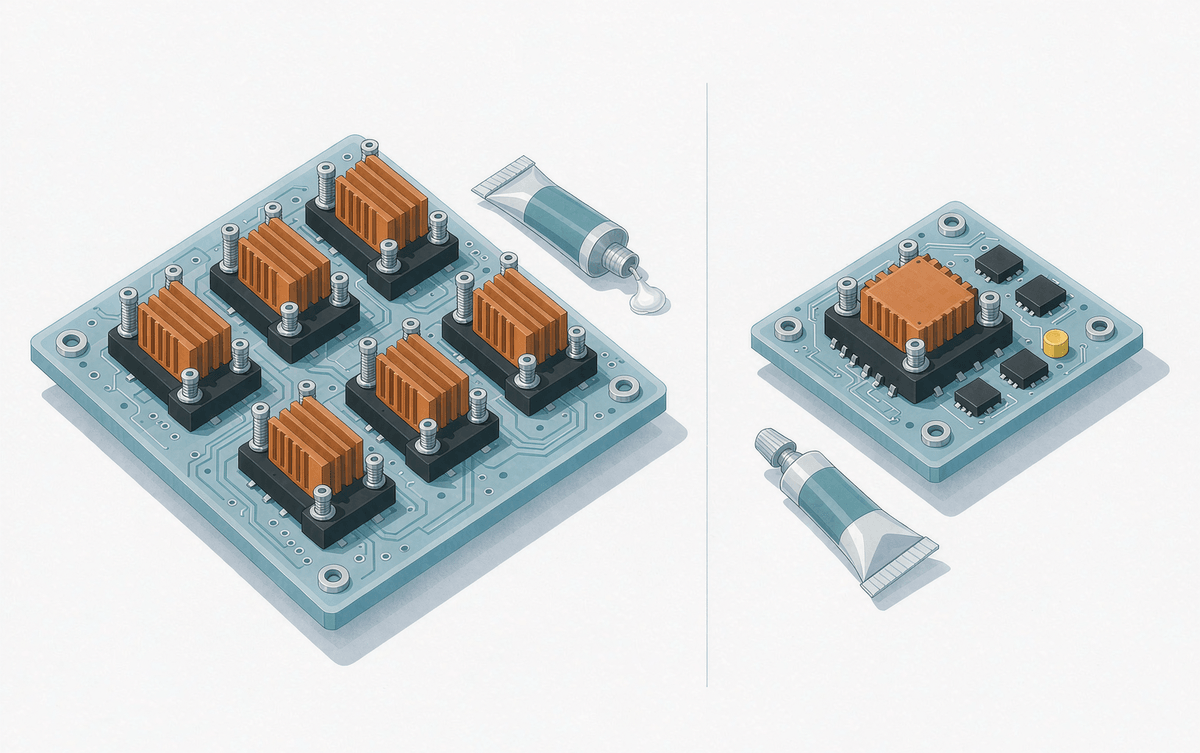
Five-Year TCO at 100k Units a Year

| Cost block (5 years) | Discrete | IPM | Saved |
| BOM materials | ¥17.50M | ¥16.45M | 6% |
| R&D (one-off) | ¥0.23M | ¥0.05M | 78% |
| PCB + SMT | ¥4.00M | ¥1.50M | 62% |
| Heatsink and structure | ¥7.50M | ¥3.50M | 53% |
| Yield loss | ¥2.10M | ¥0.35M | 83% |
| Warranty and service | ¥3.00M | ¥0.95M | 68% |
| TCO total | ¥34.33M | ¥22.80M | 33.6% |
A recent data point from the field: a second-tier air-conditioner brand moving 300 k units a year switched its indoor fan drive from discrete to our IPM. BOM down ¥6 per unit, development from 10 months to 2.5, first-pass yield 94.8% → 99.2%, field return rate 1.8% → 0.3% — about ¥3.28M saved per year. Reliability is what protects that last line; the failure mechanisms and how the module's protection layer handles them are covered in our IPM failure-mode overview.
When Discrete Still Makes Sense
To keep this honest: below roughly a thousand units a year, the one-off R&D never amortizes and discretes can win; for unusual voltage/current combinations with no standard module, discretes are the only option; and for a no-features white-label product where engineering time is treated as free, the BOM-only view may be all that matters. Everywhere else — and especially in HVAC compressors and fan drives, where the efficiency angle is developed in our HVAC inverter piece — the five-year bill is not close. If you want the numbers run on your own volumes and tariffs, send us the load profile; the model in this article is the same sheet our FAEs use.
