

Fast Recovery Diodes (FRDs) are widely utilized in high-frequency circuits, switching mode power supplies (SMPS), inverters, and motor drives due to their short reverse recovery times and excellent switching characteristics.
When selecting the right FRD for your design, what specific specifications should you look for? SHYSEMI has compiled a comprehensive guide to the 9 essential parameters of Fast Recovery Diodes to help optimize your component selection.

1. Reverse Recovery Time (trr)
Definition: Reverse recovery time is one of the most critical parameters of an FRD. It defines the time interval required for the diode to transition from a forward-conducting state to a reverse-biased (blocking) state. Specifically, it is measured from the moment the forward current crosses zero to the point where the reverse recovery current decays to a specified low value (such as the steady-state reverse leakage level).
Impact: A shorter trr yields faster turn-off speeds and lower switching losses, making the diode ideal for high-frequency applications. Minimizing trr significantly enhances overall circuit efficiency, which is particularly vital in high-frequency SMPS and inverters.
Typical Range: Standard FRDs typically feature a trr ranging from tens to hundreds of nanoseconds, whereas Ultra-Fast Recovery Diodes (UFRDs) can achieve a trr well below tens of nanoseconds.
2. Forward Voltage Drop (VF)
Definition: Forward voltage drop represents the voltage differential across the diode terminals when it is conducting in the forward direction at a specified forward current.
Impact: VF is directly dependent on the forward current; higher currents result in an increased voltage drop. A lower VF minimizes conduction power losses while the diode is active, thereby boosting overall system efficiency. Selecting a component with a low forward voltage drop is crucial for high-efficiency, high-current circuit designs.
Typical Range: The typical VF for an FRD ranges between 0.6V and 1.5V, depending heavily on the semiconductor material (e.g., Silicon vs. Silicon Carbide/SiC) and the device architecture.

3. Maximum Forward Current (IF)
Definition: Maximum forward current (often specified as continuous forward current, IF(AV)) is the maximum peak or average current that the diode can safely sustain while conducting in the forward direction.
Impact: This parameter directly dictates component selection, particularly in high-current applications like power supplies and high-power inverters. Designers must ensure that the FRD’s rated IF exceeds the maximum peak operating current of the circuit. Selecting an inadequate IF leads to thermal runaway or catastrophic device failure; therefore, maintaining an appropriate current design margin is highly recommended.
4. Maximum Reverse Voltage (VRRM)
Definition: Maximum reverse voltage—commonly referred to as Peak Repetitive Reverse Voltage (VRRM)—is the maximum instantaneous voltage that the diode can withstand when reverse-biased.
Impact: This specification determines the voltage blocking capability of the FRD. In power converters or inverter circuits, the reverse voltage stress can be substantial. Choosing an FRD with a sufficiently high VRRM is imperative to prevent voltage breakdown and subsequent circuit failure.
5. Reverse Recovery Charge (Qrr)
Definition: Reverse recovery charge is the total amount of charge that must be removed from the diode's PN junction during the reverse recovery process as it transitions from conduction to blocking state.
Impact: Qrr is intrinsically linked to trr and reflects the magnitude of the reverse current spike during switching. A larger Qrr results in a higher peak reverse recovery current, leading to increased switching losses and severe Electromagnetic Interference (EMI) issues in high-frequency circuits. Selecting a low-Qrr diode is critical for applications aimed at mitigating EMI and maximizing efficiency.
6. Junction Capacitance (Cj)
Definition: Junction capacitance refers to the parasitic capacitance across the diode's PN junction under a specified reverse-bias voltage.
Impact: In high-frequency applications, excessive junction capacitance increases switching losses and degrades the high-frequency response of the circuit. Lower junction capacitance enhances high-frequency performance, which is especially critical in high-speed switching topologies and RF circuits. Engineers should evaluate Cj against the target operating frequency to prevent performance degradation.
7. Operating Temperature Range (Top / Tj)
Definition: The operating temperature range defines the ambient or junction temperature limits within which the FRD can safely and reliably function.
Impact: Environmental conditions and thermal dissipation significantly alter semiconductor behavior. Industrial-grade FRDs typically support an operating junction temperature (Tj) range from -55°C to +150°C (with some advanced components reaching +175°C). To guarantee long-term reliability under thermal extremes, designers must account for temperature-induced parameter shifts and select wider temperature-grade components when necessary.
8. Reverse Leakage Current (IR)
Definition: Reverse leakage current is the minor current that flows through the diode in the reverse direction when a reverse-bias voltage below the breakdown threshold is applied.
Impact: IR is highly temperature-dependent and increases exponentially with rising temperatures. At elevated operating temperatures, high leakage current leads to unnecessary power dissipation and reduced efficiency. For power-sensitive or battery-operated designs, choosing an FRD with ultra-low reverse leakage current helps maintain peak system efficiency.

9. Package Type
Definition: The package type refers to the physical enclosure and mechanical structure of the diode, which dictates its footprint, thermal resistance (R\theta JC), and mounting configuration.
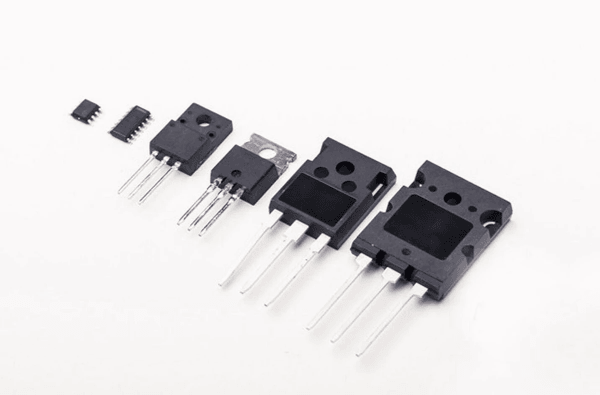
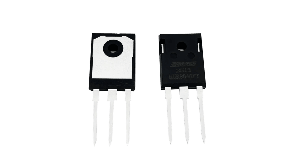
Impact: Common FRD packages include through-hole types like TO-220 and TO-3P, surface-mount options, and stud-mount housings for heavy industrial use. Each package serves distinct power levels and mechanical requirements. For instance, TO-220 is well-suited for low-to-medium power applications, whereas stud-mount packages handle high-power demands. Selecting the correct package requires balancing board space, thermal management constraints, and manufacturing costs.
Conclusion
In summary, evaluating a Fast Recovery Diode requires careful consideration of its reverse recovery time, forward voltage drop, maximum forward current, peak repetitive reverse voltage, reverse recovery charge, junction capacitance, operating temperature, leakage current, and package type. Together, these specifications define the performance boundaries and ideal application space for the device. For optimal circuit reliability and performance, designers should holistically evaluate these parameters based on their specific application requirements.

For any other ideas or requirements, please feel free to send us an email (info@shysemi.com) or contact us directly via WhatsApp: +86 15361554542.
Frequently Asked Questions (FAQs)
Q1: What is the main difference between a Standard Rectifier Diode and a Fast Recovery Diode (FRD)?
A: The primary difference lies in their reverse recovery time (trr). Standard rectifiers (like those used in 50Hz/60Hz line rectification) have a relatively long trr, often measuring in microseconds, which makes them highly inefficient at high frequencies. In contrast, Fast Recovery Diodes (FRDs) are optimized with an ultra-short trr (typically tens to hundreds of nanoseconds), enabling them to switch on and off rapidly with minimal switching losses in high-frequency applications.
Q2: When should I choose an Ultra-Fast Recovery Diode (UFRD) or a Silicon Carbide (SiC) Diode over a standard FRD?
A: Choose a UFRD when your application operates at higher switching frequencies (e.g., 50 kHz to over 100 kHz) where a standard FRD's trr would cause excessive switching losses.
- Choose a SiC Schottky Diode for high-voltage, high-frequency, and high-efficiency topologies (like PFC or EV inverters). SiC diodes exhibit virtually zero reverse recovery charge (Qrr), meaning their switching performance is nearly independent of temperature, offering the lowest switching losses available in power electronics.
Q3: How do I select the right package type for my FRD design?
A: Package selection depends on your system's thermal management requirements and space constraints. For low-to-medium power applications with limited space, surface-mount devices (SMD) are preferred. For high-power or high-current applications where heat dissipation is critical, through-hole packages like TO-220 or TO-3P are ideal because they allow direct attachment to external heatsinks to minimize thermal resistance (R\theta JC).