

Rectifier diodes and switching diodes are selected for different things. A line-frequency rectifier diode mostly needs a low forward drop and a high breakdown voltage — reverse recovery time barely matters. A diode that works next to a fast switch needs the opposite set of priorities: short reverse recovery, controlled recovery behavior, and a forward drop you can live with. That second category is the fast recovery diode (FRD), and it spends its life as the silent partner of IGBTs, SiC MOSFETs and other switches.
Why Switching Circuits Need Recovery in the First Place
When a PiN diode conducts, minority carriers flood the drift region. The moment the circuit tries to reverse the voltage, those carriers must be swept out before the diode can actually block. Until then, reverse current flows — and the switch has to carry it. The charge involved (Qrr) and the shape of that recovery current decide how much extra loss and stress every switching cycle adds. In a hard-switched converter, a slow diode quietly taxes both itself and its neighbor.
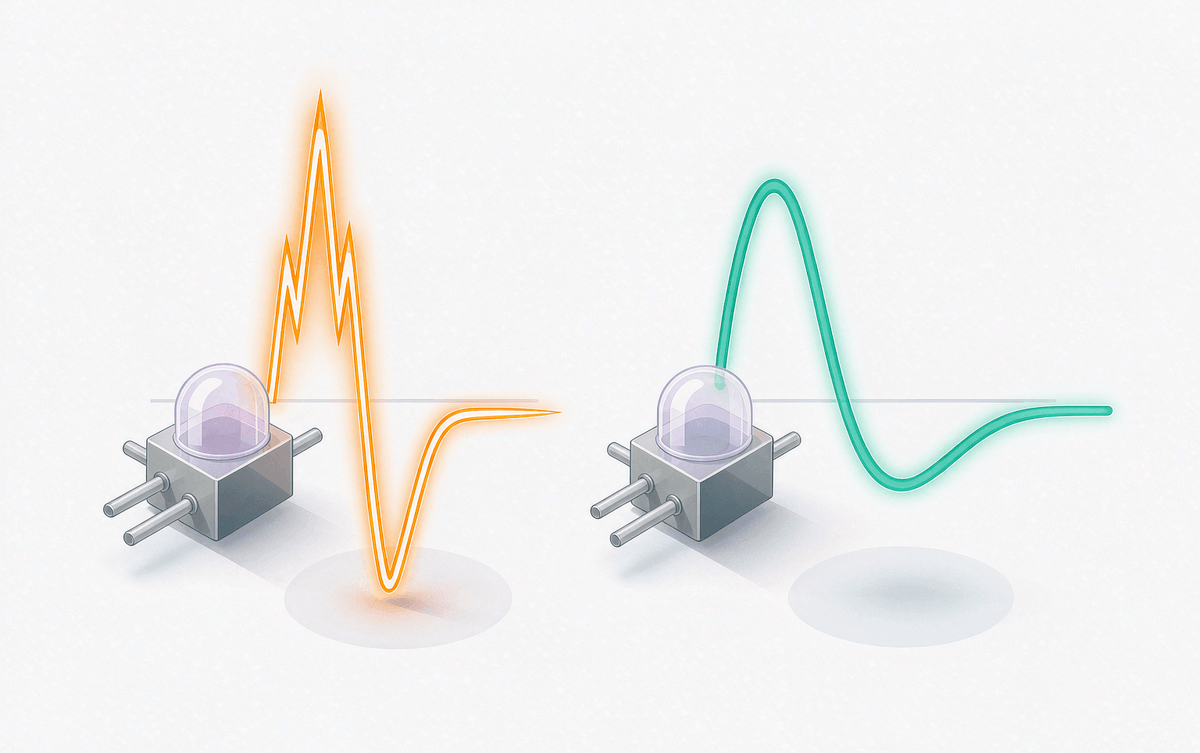
Softness Beats Raw Speed
Engineers quote recovery time, but the spec that saves your EMC budget is softness — the ratio of the current fall time to the delay time during recovery. A hard-recovery diode snaps the current off abruptly, exciting parasitic inductance into ringing, voltage spikes and radiated emissions. A soft-recovery diode hands the current back gently. Two diodes with identical trr can behave completely differently in a real layout, which is why we tell customers to evaluate all nine key FRD parameters together, not trr alone.
How Manufacturers Make a Diode Fast
Reverse recovery is governed by minority-carrier lifetime, so every fast-diode technology is a way of shortening that lifetime — each with trade-offs:
| Approach | Leakage current | Forward peak voltage | Recovery behavior | Watch-outs |
| Gold / platinum diffusion | Higher | Higher | Faster, but switching loss grows | Worse high-temperature leakage |
| Electron irradiation | Lower | Moderate | Recovery peak current can be large, hard to stay soft | Switching loss can rise if recovery turns hard |
| Proton irradiation (localized) | Lower | Moderate | Lower recovery peak, easier soft recovery | Defect region must not overlap the junction space-charge region, or high-temperature leakage and breakdown suffer |
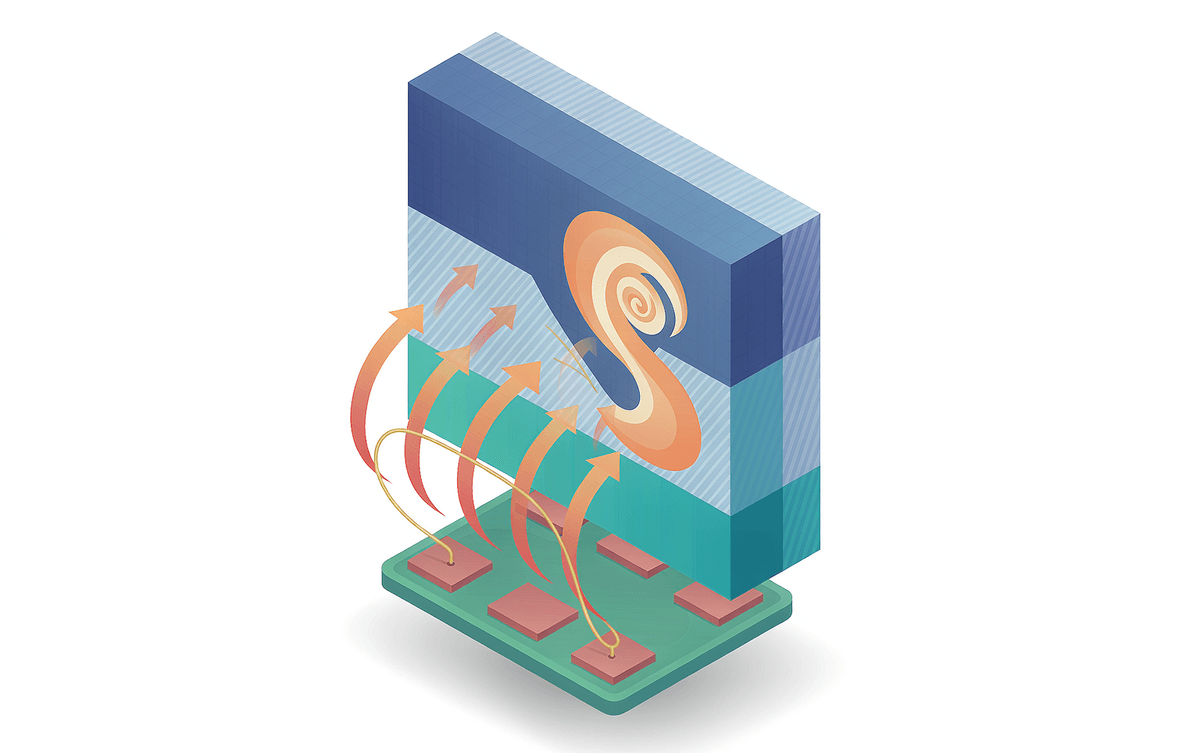
Structure does the same job from another direction. Reduce anode doping and thickness and you inject fewer carriers: conduction gets slightly worse, recovery gets much better. More elegant are self-adjusting structures — like the SPEED diode, which uses a heavily doped p+ region inside a low-doped p anode. At low current the plain pn-n+ junction sets the drop; at high current, conductivity modulation in the p+pn- region takes over. The result is a nearly flat forward characteristic at high current, strong surge capability, and fast recovery. The MPS structure goes further by merging a PiN diode and a Schottky diode in parallel: the Schottky carries low current with no recovery charge, while the PiN junction shields the Schottky under reverse bias and takes the blocking voltage.
The FRD and IGBT: Designed as a Pair
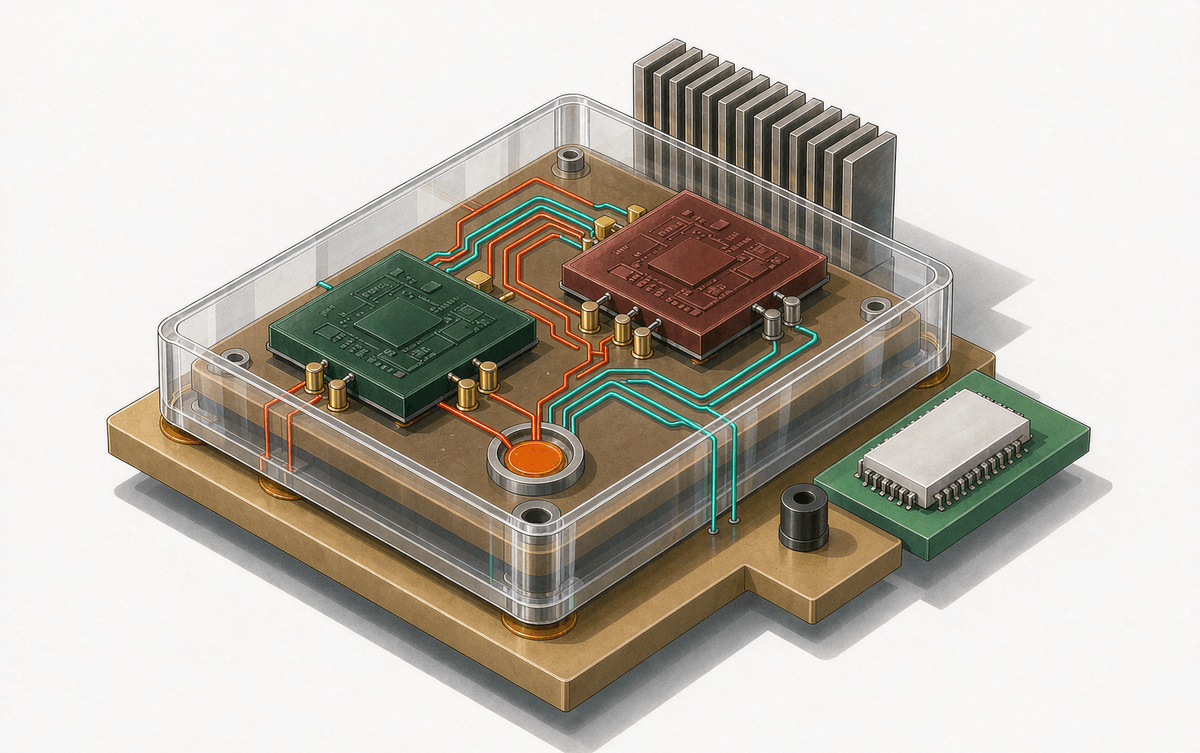
In practice an FRD rarely lives alone. It freewheels for the IGBT in every bridge leg, so the two devices share a switching event: the IGBT turns on into the diode's recovery current, and the diode's snappiness lands on the IGBT's turn-off. That is why module makers co-package them and why matching matters — recovery charge, softness and forward drop must fit the switch's speed, or one device quietly degrades the other's losses. If you are pairing them yourself, start with the freewheeling diode's role in inductive circuits.
Selection Notes from the Field
Match Qrr and softness to your switching frequency — above roughly 15–20 kHz, recovery loss is often the diode's dominant loss, not forward drop. Check the recovery behavior at your actual current, not the datasheet's favorite point. And in high-frequency stages the layout speaks as loudly as the diode: how IPM, IGBT and FRD work together in dense power hardware shows the system view. Curious how far recovery tuning can go? We even tested ultra-fast diodes in audio applications.
For platforms migrating toward wide-bandgap switches, remember that a SiC MOSFET's body diode behaves differently and many designs still add an external SiC or optimized Si FRD — the diode selection rules in this article still apply, see our hybrid SiC IPM approach.
